Friday, February 14, 2020
Thursday, February 13, 2020
Daily Current Affairs, 13th February 2020
VisionIAS
14:58

1) UN celebrates World Radio Day on 13th of February

On the 9th edition of the World Radio Day, UNESCO has appealed to radio stations to uphold diversity, both in their newsroom as well as on the airwaves.
The 9th edition of World Radio Day is divided into three main sub-themes:
•Advocating for pluralism in radio, including a mix of public, private and community broadcasters.
•Encouraging representation in the newsroom, with teams comprised of diverse society groups.
•Promoting a diversity of editorial content and programme types reflecting the variety of the audiences.
2) National Workshop on e-office held in New Delhi
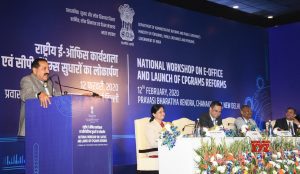
•The Centralized Public Grievance Redress And Monitoring System (CPGRAMS) 7.0 version has mapped the last mile grievance officers hence saving the time as well as improving the quality of disposal of cases. The CPGRAMS aligns with the Government of India’s vision of “Minimum Government-Maximum Governance”.
3) UK’s start-up launches 1st big batch of satellites

4) Largest air quality monitoring network of India to be installed in Mumbai
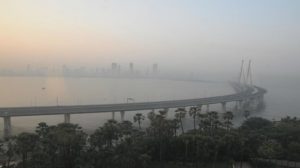
•Location-wise updates on the quality of air will be provided by these stations. The air quality monitoring network project will be funded by the BMC and private players and is expected to be finished in the next five years.
•At present, Mumbai is having 30 air quality monitoring stations out of which 5 stations are under Brihanmumbai Municipal Corporation (BMC), 10 stations are under the System of Air Quality Weather Forecasting And Research (SAFAR) and 15 stations come under the Maharashtra Pollution Control Board (MPCB).
5) BIMSTEC Disaster Management Exercise 2020 begins in Bhubaneswar

Participating countries:
•The representatives of BIMSTEC member countries from India, Myanmar, Bangladesh, Nepal and Sri Lanka are participating in the exercise. Thailand and Bhutan are not participating this year.
6) Mobile World Congress cancelled over coronavirus fears

•MWC was due to be held in Barcelona on 24-27 February. More than 100,000 people usually attend the annual event, about 6,000 of whom travel from China.
7) Dharmendra Rai’s book “The Thin Mind Map Book” launched
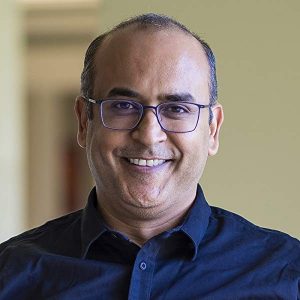
•Dharmendra Rai is a mind mapping & brain literacy pioneer and has a world record of conducting more than 380 mind mapping seminars in under 10 years. He was also the first person in the world to talk on TEDx on Creativity & Mind Mapping.
8) South Indian Bank bagged two awards at the Banking Technology 2019 awards by IBA

•South Indian Bank has bagged two awards at the Banking Technology 2019 awards instituted by the Indian Banks’ Association. This event was held in Indian Bank Association’s 15th Annual Banking Technology Conference, Expo and Awards held in Mumbai, Maharashtra. The South Indian Bank emerged the winner in the ‘Most Customer-Centric Bank Using Technology’ category and runner up in the ‘Best Payments Initiative’ category amongst small Banks’.
9) Mumbai will host “Disaster Risk Financing, Insurance and Risk Transfer” Workshop
•The National Workshop on Disaster Risk Financing, Insurance and Risk Transfer will concentrate on the significance of financial resilience in areas frequently struck by natural disasters. It will also stress on the government’s agenda “Work towards risk coverage for all-starting from poor households to SMEs to multi-national corporations to nation states” and “Investing in Disaster Risk Reduction (DRR) for Resilience“. The workshop will also deliberate on the issues in assessment of insurance faced by different stakeholders.
•The delegates from Asian Development Bank, World Bank, United Nations Development Programme along with other multilateral organizations will participate in the workshop.
10) Finance Ministry notifies ‘Printing of One Rupee Currency Notes Rules, 2020’
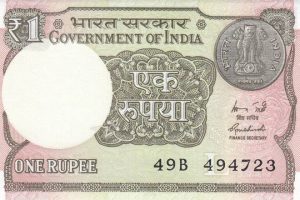
New one rupee note dimensions
•The One Rupee currency note shall be rectangular 9.7 x 6.3 cms, with its paper made of 100 per cent (cotton) rag content. The note will be 110 microns thick, weighing 90 GSM (Grams per Square Meter). It will also have multi-tonal watermarks with Ashoka Pillar in the window without the words ‘सत्यमेव जयते’ (Satyamev Jayate), hidden numeral ‘1’ in the centre and the hidden word ‘भारत’ (Bharat) vertically arranged on the right-hand side.
New one rupee note design
•The Obverse side of one rupee note will contain the words “भारत सरकार‟ above the words “Government of India” with the bilingual signature of Shri Atanu Chakraborty, Secretary, Ministry of Finance and with the replica of New Rupee One coin with ‘₹’ symbol of 2020 issued with ‘सत्यमेव जयते‟ and capital Inset letter ‘L’ in numbering panel.
•The design surrounding will be of the Sagar Samrat, which is an oil exploration rig. The rig drilled the first offshore well in 1974 and has been in service with the Oil and Natural Gas Corporation (ONGC) since.
New one rupee note colour
•The overall colour of One Rupee Currency note will be predominantly pink green on obverse and reverse in combination with others.
History of currency note in India
•Currency notes were introduced in India in 1861, and the one-rupee note was introduced by the British on November 30, 1917. Although the printing of the note was discontinued in 1994, it was reintroduced in 2015 after a gap of 22 years.
11) President Kovind presents President’s Colour to INS Shivaji
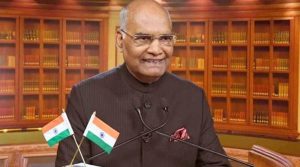
•It is now the premier technical training establishment of the Indian Navy with the motto Kar-masu Kaushalam. INS Shivaji imparts training in an engineering discipline to personnel of the Navy, Coast Guard, other sister services and allied countries. It has trained over two lakh officers and sailors, both Indian and international, since inception. All courses conducted at INS Shivaji are recognised by the All India Council for Technical Education.

The HINDU Notes – 13th February 2020
VisionIAS
14:37

📰 Bill to regulate pesticide trade gets green light
It provides for compensation due to losses
•The Union Cabinet on Wednesday approved the Pesticides Management Bill, 2020, which, the government claims will regulate the business of pesticides and compensate farmers in case of losses from the use of spurious agro chemicals.
•“Today, the pesticide business is regulated by 1968 rules which have become age-old and need immediate rewriting,” said Information and Broadcasting Minister Prakash Javadekar.
•Mr. Javadekar said farmers would also be empowered to get all information as the data would be in open source and in all languages.
•In February 2018, the Centre released a draft of the pesticides Bill that aims to replace the existing Insecticides Act of 1968.
•A key proposal in the 2018 version was to raise penalties on the sale of prohibited or spurious pesticides to Rs. 50 lakh and up to five years’ imprisonment, from the current Rs. 2,000 and up to three years’ imprisonment. It is unclear if these provisions have been retained in the latest version of Bill that was cleared by the Union Cabinet.
‘Central fund likely’
•“If there is any loss because of the spurious or low quality of pesticides then there is a provision for compensations ... If required, the government will form a central fund which will take care of compensation,” Mr. Javadekar said.
•The Centre for Science and Environment, in 2018, had criticised the Bill. “The existing draft provides inadequate representation to States ... The States should have a say in final decision making on pesticide, as they have the best understanding on the agro-ecological climate, environment and soil conditions,” it said in a statement.
📰 Centre clears Major Ports Authority Bill
THE HINDU NEWSPAPER IMPORTANT ARTICLES 13.02.2020
VisionIAS
14:24

FRONT PAGE
NATIONAL
INTERNATIONAL
OPINION
