Wednesday, April 08, 2020

Forum IAS World History PDF Download
VisionIAS
06:17
Forum IAS World History PDF

Click Here to download Forum IAS World History PDF
Click Here to Like our Facebook page for latest updates and free ebooks

Click Here to download Forum IAS World History PDF
Click Here to Like our Facebook page for latest updates and free ebooks

GS SCORE Prelims 2020 Test 36 With Solution PDF
VisionIAS
06:15
GS SCORE Prelims 2020 Test 36 With Solution PDF

Click Here to download GS SCORE Prelims 2020 Test 36 With Solution PDF
Click Here to Like our Facebook page for latest updates and free ebooks
Tuesday, April 07, 2020
Daily Current Affairs, 07th April 2020
VisionIAS
16:55

1) World Health Day observed globally on 7 April

•The Theme of World Health Day 2020: Support Nurses And Midwives.
•On this day, the World Health Organization calls for people to extend their gratitude and support nurses and midwives across the world. The WHO has named this year the ‘International Year of the Nurse and the Midwife’.
2) International Day of Reflection on the 1994 Genocide against the Tutsi in Rwanda

•For approximately 100 days, over 800,000 Tutsi were assassinated. UNESCO aims to educate the world population regarding genocides and the consequences of the crime.
3) Ministry of Civil Aviation launches “Lifeline UDAN” initiative

•With support from Air India, Alliance Air, IAF and private airlines, medical supplies of more than 184 tons have been delivered till date during lockdown period. Air India and IAF collaborated for Ladakh, Kargil, Dimapur, Imphal, Guwahati, Chennai, Ahmedabad, Jammu, Kargil, Leh, Srinagar, Chandigarh and Port Blair. On the International platform, Air India will be operating dedicated scheduled cargo flights to China for the uplifting of critical medical equipment as per the requirement.
4) NASA unveils plan for “Artemis” base camp on the moon by 2024
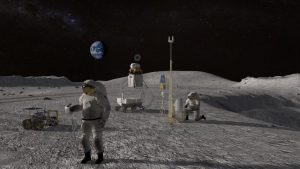
•The report titled NASA’s Plan for Sustained Lunar Exploration and Development offers a summary of how the space agency will accomplish the 2024 moon landing mission. The initial plan is to move to one to two-month stays to learn more about the moon and the universe. It also gives information on what the US would achieve from a long-term presence on the moon and lunar orbit.
5) UB Pravin Rao becomes new chairman of Nasscom
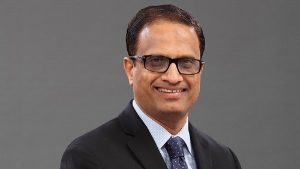
•Besides this, Accenture India chairman and Senior Managing Director, Rekha M Menon will be the Vice-Chairperson for the industry body. The newly appointed leadership, along with President Debjani Ghosh, will help the industry body achieve its 2025 vision for the industry.
6) Tenure of TDSAT Chairman extended by 3-months
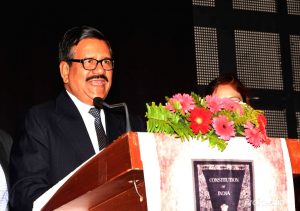
•The incumbent Chairman of the Telecom Disputes Settlement and Appellate Tribunal (TDSAT), Justice Shiva Kirti Singh assumed the office in April 2017 was set to retire on 20th of April 2020.
7) PNB Housing Finance ties-up with JICA to raise $75 million

•The partnership aims to facilitate low-income households of India with affordable housing, based on the Facility for Accelerating Financial Inclusion in Asia.
8) Thailand & Malaysia weightlifters banned from Tokyo Olympics 2020

•Due to the doping violations, the membership status of Thai Amateur Weightlifting Association (TAWA) has been suspended for a period of three years through to 1 April 2023 while Malaysian Weightlifting Federation (MWF) is suspended from all IWF activities for a period 12 months through to 1 April 2021.
Raus IAS Prelims Compass 2020 Budget and Economic Survey PDF
VisionIAS
12:19
Raus IAS Prelims Compass 2020 Budget and Economic Survey PDF

Click Here to download Raus IAS Prelims Compass 2020 Budget and Economic Survey PDF
Click Here to Like our Facebook page for latest updates and free ebooks
The HINDU Notes – 07th April 2020
VisionIAS
12:04

📰 Restructuring our food system for a healthy world
Many disease outbreaks show that within the welfare of animals lies the welfare of people
•The novel coronavirus (COVID-19) pandemic is an opportunity for us to analyse our food system, ideate and make changes for a healthier and more sustainable future. It is widely believed that the disease is zoonotic, which means that it got transferred to humans from the exotic animals stored in the ‘wet markets’ in Wuhan, China, the epicentre of the outbreak. Like SARS-CoV-2, SARS too was believed to have spread from civet cats to human beings in 2002. There are similar theories about Ebola and HIV. What lessons do these various outbreaks offer us?
Antibiotic resistance
•The first is for us to rethink the ways in which we farm animals. India has the world’s largest livestock population, is the largest producer of buffalo meat and produces about a 100 billion eggs annually. Animal agriculture is moving away from backyard operations to larger industrial facilities which aim to produce more meat with fewer resources. Industrialising animal agriculture comes at a huge cost to the environment, animals and to human beings. One concern is antibiotic resistance. According to the World Health Organization, the large volume of antibiotics given to farm animals contributed to the development of antimicrobial-resistant bacteria particularly in settings of intensive animal production.
•A majority of Indian households buy meat from local meat shops which, much like the wet markets, follow no regulations in the way the animals are kept or slaughtered. Most of the standalone meat vendors do not follow the standards laid down by the Food Safety and Standards Authority of India (FSSAI). Further, while welfare standards of animals are often neglected, one thing is clear: immunocompromised animals are the most likely to pass on an infection. It is thus imperative that India understand the risk of zoonosis and antibiotic resistance in terms of following FSSAI regulations and adhering to welfare standards in animal husbandry.
•The second lesson is to undertake greater investment in the alternate protein industry. India has a high rate of malnutrition among children under the age of five and is trying to combat this by encouraging meat production. With a paucity of space, this can only be done by giving a boost to industrial agriculture. Before India does that, it must explore the potential behind plant and cultivated meats. Plant-based meats are made from plants and are cholesterol- and antibiotic-free, but taste and feel like meat. Cultivated meat is produced by taking a small sample of animal cells and replicating them outside of the animal; the resulting product is real meat, but without the antibiotics, E. coli, salmonella, or animal waste. These foods represent an enormous opportunity to solve the problems of rampant malnutrition, low farmer incomes, antibiotic dependency, and inhumane factory farming of animals.
•In the Western world, these plant-based meats are already popular and two plant-based companies – the Impossible Foods and Beyond Meat – won the Champions of Earth award, the United Nation’s highest environmental honour. India, an agrarian economy, could export raw materials to make these products and feed its people.
Every act has an impact
•Finally, we must understand the interconnectedness of the world. Advocates of animal rights have argued that within the welfare of animals lies the welfare of people. Every act we undertake has an impact on us all. Pursuant to global lockdowns, wild animal populations have returned to cities and pollution levels have dropped globally. We need to innovate and encourage technologies that allow us to maintain the standard of living we are used to while ensuring that we are working towards a healthier world.
📰 Preparing for SAARC 2.0
GS SCORE Prelims 2020 Test 35 With Solution PDF
VisionIAS
07:56
GS SCORE Prelims 2020 Test 35 With Solution PDF
Click Here to download GS SCORE Prelims 2020 Test 35 With Solution PDF
Click Here to Like our Facebook page for latest updates and free ebooks
PMF IAS Geography Notes 2019 PDF Download
VisionIAS
07:50

