VISION

Material For Exam

Recent Update

Monday, April 20, 2020

Daily Current Affairs, 20th April 2020

17:27


1) World Liver Day observed globally on 19 April
•World Liver day is observed on 19 April every year. The day is observed to spread awareness about the liver-related disease. The liver is the second largest and the most complex organ in the body, with the exception of the brain.

•Liver diseases can be caused by hepatitis A, B, C, alcohol and drugs. Viral Hepatitis occurs due to the consumption of contaminated food and water, unsafe sexual practices and drug abuse. As per World Health Organisation (WHO), liver diseases are 10th most common cause of death in India.

2) UN Chinese Language Day observed globally on 20 April
•UN Chinese Language Day is observed globally on April 20 every year. The day has been chosen to pay tribute to Cangjie, who is a mythical figure who is presumed to have invented Chinese characters about 5,000 years ago.

•The 1st Chinese Language Day was celebrated in 2010 on the 12th of November, but since 2011 the date has been on the 20th of April. The day celebrates multilingualism and cultural diversity as well as promote equal use of all six of its official working languages throughout the organization.

3) “National List of Intangible Cultural Heritage of India” launched
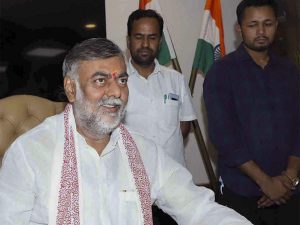
•The “National List of Intangible Cultural Heritage (ICH) of India” has been launched by the Union Minister for Culture (I/C) Prahlad Singh Patel. The “National List of Intangible Cultural Heritage (ICH) of India”, which is a part of the Vision 2024 of the Ministry of Culture, raises awareness about the various intangible cultural heritage elements from different parts of India at national as well as international level. It also recognizes the diversity of Indian culture instilled in its intangible heritage and aims to ensure its protection.

The National List of Intangible Cultural Heritage of India has been classified in the following 5 broad domains:

•Oral traditions and expressions, including language as a vehicle of the intangible cultural heritage

•Performing arts

•Social practices, rituals and festive events

•Knowledge and practices concerning nature and the universe

•Traditional craftsmanship

The National List of Intangible Cultural Heritage of India has been classified in the above 5 broad domains keeping in view the UNESCO’s 2003 Convention for Safeguarding of Intangible Cultural Heritage.

4) GoI launches dashboard for combating and containing Covid-19


•Government of India has launched a dashboard containing information of human resources for combating and containing Covid-19. This dashbaord has been created as an online portal on the website “covidwarriors.gov.in”. This portal is a compilation of data of doctors including AYUSH doctors, nurses and other health care professionals. It also constitutes information of volunteers from Pradhan Mantri Kaushal Vikas Yojana (PMGKVY), Nehru Yuva Kendra Sangathan (NYKs), NCC NSS, ex Servicemen etc. So, the online portal contains state wise as well as district wise availability of the human resources from various groups including the contact details of the nodal officers.

•The ground level administration at state, district or municipal levels will use this online portal to prepare Crisis Management/Contingency Plans considering the available manpower, in coordination with nodal officers for each group. The volunteers from these groups can perform various tasks like enforcing social distancing at various places such as banks, ration shops, mandis and for providing help to elderly, divyang and orphanages.

5) Digital directory titled “Covid FYI” launched

•“Covid FYI” is a one-stop digital directory containing information of all COVID-19 related services and helplines released by official sources. This platform has been made by an international team of 16 members led by Simran Soni, a student of Indian Institute of Management Kozhikode. Covid FYI a one-stop COVID-19 platform for accessing emergency services from official government sources.

•Covid FYI platform has been developed to bring the right information to the right people, ensuring authenticity and credibility of the information by providing only official information from Government organisations.

6) UP govt join hands with Google to geotag community kitchens
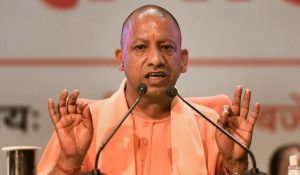
•Uttar Pradesh Government joined hands with tech giant Google to formed geotag community kitchens in the state. The kitchens produce 12 lakh food packets on a daily basis. Now, Uttar Pradesh became the 1st state to geotag community kitchens. Around 7,368 community kitchens located in 75 districts were geotagged.

•The State Government mobilized state resources on a massive scale to establish the kitchens. This initiative was done through NGO’s and religious organizations. For these initiatives, Remote Sensing Application Centre (RSAC) has developed the application to learn about the location of the community kitchens. The application was developed by feeding data of the latitudes and longitudes of the community kitchen. Apart from this, Google will also provide the centres in its application.

7) Fitch slashes India’s GDP growth forecast to 1.8%
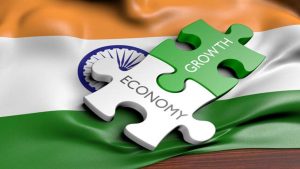
•Fitch Solutions has slashed India’s economic growth forecast to 1.8% for the financial year 2020-21. Fitch Solutions has lowered India’s economic growth forecast from 4.6% stating large-scale loss of income across the economy due to domestic outbreak of COVID-19, causing contracted private consumption. It has also predicted the contraction in fixed investments as capital expenditure has been reduced by businesses to conserve cash amid elevated economic uncertainty.

•Fitch Solutions has also reduced the real GDP forecast of China for the financial year 2020 from 2.6% to 1.1%, stating the impact of a worsening global economic outlook on China’s economy.

8) A book titled “Shuttling to the Top: The Story of P.V. Sindhu”, released

•Sports journalist, V. Krishnaswamy, authored a book titled “Shuttling to the Top: The Story of P.V. Sindhu”, released. The book narrates the journey of badminton player PV Sindhu, from her early life to becoming a world champion and what lies ahead.

•The book has been published by HarperCollins Publishers India. Sindhu is India’s first and only woman athlete to win silver at the Olympics as well as the only Indian named in Forbes” list of world”s top 10 highest-paid female athletes.



Read More

The HINDU Notes – 20th April 2020

12:53


📰 A shot of hope with a game changing vaccine

Using lessons learnt, a social vaccine can build societal immunity to the devastating effects of pandemics, now and later

•Over the initial phase of the national lockdown (March 24 to April 14), India reported a 20-fold increase in confirmed SARS-CoV-2/COVID-19 cases (468 to >10,000), and a 36-fold increase in deaths (9 to 330). Increased testing may partly account for this; but testing is still inadequate and this data represent underestimates. The case-fatality of 2% to 3% is indicative of the large number of deaths India can expect.

•Debates about the relative merits of mitigation to “flatten the curve” versus allowing “herd immunity” to build naturally are increasingly irrelevant. The failures in widespread testing for infection or for immunity imply that transmission-chains via asymptomatic, mildly-symptomatic and pre-symptomatic people remain undetected. Most countries, including India, are inadvertently employing hybrid strategies.

•The lockdown (an extreme example of mitigation) has been extended to May 3. The dire socio-economic consequences and the scale of human tragedy that play out daily make a prolonged total lockdown undesirable. Alongside infection-control, a strategic plan of action to mitigate suffering and to stimulate economic recovery is urgently needed.

As a series of measures

•In a recent interview, the Union Health Minister, Harsh Vardhan, asserted that lockdowns and social distancing are the most effective “social vaccines” available to fight the pandemic. A social vaccine has far broader implications.

•So what is a social vaccine? A social vaccine is a metaphor for a series of social and behavioural measures that governments can use to raise public consciousness about unhealthy situations through social mobilisation. Social mobilisation can empower populations to resist unhealthy practices, increase resilience, and foster advocacy for change. This can drive political will to take action in the interests of society and hold governments accountable to address the social determinants of health by adopting progressive socio-economic policies and regulatory mechanisms that promote health equity and reduce vulnerability to disease.

•When applied to pandemics, the effectiveness of a social vaccine is determined by the extent of dissemination and uptake of accurate information about personal infection risk and methods to reduce the risk through consistent core messages disseminated through a variety of means. A social vaccine addresses barriers and facilitators of behaviour change, whether attitudinal, social, cultural, or economic, and supplements information, education, and communication (IEC) with targeted social and behaviour change communication (SBCC) strategies.

•Uganda and Thailand used these strategies effectively during the HIV/AIDS pandemic to bring down the incidence of HIV infection, before highly active antiretroviral treatment (HAART) was introduced in 1995. They demonstrated how an effective social vaccine helped “flatten the curve” till effective treatments were discovered that dramatically reduced mortality, viral loads and infection transmission.

Lessons from HIV pandemic

•The human immunodeficiency virus (HIV) that causes the acquired immune deficiency syndrome (AIDS) is believed to have made the zoonotic jump from monkeys through chimpanzees to humans in Africa as early as the 1920s, but the HIV/AIDS epidemic was detected in 1981 and was a pandemic by 1985. From 1981 till December 2018, around 74.9 (range: 58.3 to 98.1) million people worldwide were HIV-infected, and around 32.0 (range: 23.6 to 43.8) million died (43%, range: 41 to 45%) from AIDS-related illnesses.

•The early years of the HIV/AIDS pandemic were also a time of global panic. The cause was unknown (till 1984) and diagnostic tests were unavailable (till 1985). Since there was no treatment, a diagnosis of HIV infection was a death sentence. Widespread fears of contagion rendered many infected people homeless and unemployed. Many were denied access to care. Stigma, discrimination and violence towards infected individuals, their families, social groups (sex-workers, gay men, drug users, truck drivers, migrants), and even health workers, were common. Criminalising sex-work and injecting drug use followed. Conspiracy theories, misinformation and unproven remedies were widely propagated. The blame game targeted world leaders and international agencies. The preparedness of health systems, societal prejudices and socio-economic inequities were starkly exposed.

•Reducing HIV transmission centred on acknowledging that everybody was potentially infected — even those apparently healthy — and that infection occurred predominantly through sexual transmission and intravenous drug use. The core preventive messages involved being faithful to one sexual partner or 100% condom use during sexual intercourse outside stable relationships; resisting peer-pressure for risky behaviours, and harm reduction for intravenous drug use. These measures conflicted with prevailing cultural, social, religious, behavioural and legal norms. IEC and SBCC activities targeted (and partnered) individuals, families, community leaders, peer-led community networks and social and health systems to change attitudes and behaviours. Religious and community leaders were key change agents. For example, the Catholic Church in Uganda did not initially support promoting condoms for safe sex since its use prevents life. After large numbers of people died of AIDS, their tacit acknowledgment that their religion did not preclude the use of condoms to prevent death was an important turning point. Thailand pioneered the effective use of social marketing of condoms for safe sex and used humour to defuse social taboos about publicly discussing sex.

•These strategies and advocacy against stigma and discrimination were successfully adapted in India. These skills and experiences can be innovatively adapted for the current pandemic.

How it can work

•The core infection-control messages are available from official sources. Maintaining physical distancing in social situations (unless impossible) and wearing cloth masks or facial coverings in public (especially where distancing is impossible) by 100% of people (and 100% of the time) is key to preventing infection along with regular disinfection of oneself and one’s surroundings. Effective and innovative IEC and SBCC strategies should address the barriers and facilitators to implementation. People are more likely to practise these behaviours if all leaders (without exception) promote them publicly and consistently, the whole community believes in their importance, and if proper information, support, and materials are available and accessible. Coercive or punitive methods are invariably counter-productive, as was seen with HIV/AIDS.

•A social vaccine also requires people to hold leaders accountable to invest in: rapidly scaling-up testing; meeting the basic and economic needs of vulnerable sections; providing psychological support where needed; not communalising or politicising the pandemic; providing adequate personal protective equipment (PPE) to front-line workers in health, sanitation, transport and other essential services; and not compromising the privacy and dignity of infected individuals and their families in the interest of public health. Building trust is key if government-imposed mitigation strategies are to be embraced by the population.

•Re-purposing and funding relevant industries and small and medium businesses to produce materials such as PPE, hand sanitisers and medical equipment; community groups to supply cloth masks, soap, etc., and innovative social marketing of these are other essential components of the social vaccine. The components of the social vaccine should be in place before relaxing or lifting the lockdown.

•There is still no biomedical vaccine for HIV/AIDS. Considering the limited efficacy and uptake of influenza vaccines, vaccines for SARS-CoV-2/COVID-19 may not provide a panacea. Effective treatments to reduce deaths with COVID-19 may emerge, but till then, and even afterwards, a social vaccine is needed. A social vaccine can build societal immunity to the devastating effects of future pandemics by the lessons learned about addressing the root causes, and our responses to the current one.

📰 Economy in lockdown: On India’s worst case scenario

Read More

UPSC IAS Complete Study Material Free Download Pdf (Hindi Medium)

08:00

Hindi Medium Complete NCERT


Bharat bhautik paryavaran hindi pdf

Bhautik Bhugol Ke Mool Sidhant ncert hindi

Manav bhugol ke mool siddhant hindi pdf

Bhartiya itihas ke kuch vishay bhag 1 hindi pdf

Bhartiya itihas ke kuch vishay bhag 2 hindi pdf

Bhartiya itihas ke kuch vishay bhag 3 hindi pdf

Viswa itihas ke kuch vishay hindi pdf

Hamara atit itihas ncert hindi

Jeev vigyan 12th ncert hindi

Loktantrik rajniti 1 ncert hindi

Loktantrik rajniti in hindi 2

Manovigyan ncert hindi

Bhartiya samvidhan in hindi book free download pdf

Bharat ka samvidhan sidhant aur vyavhar 2

Samkalin bharat 2 pdf

Samaj ka bodh sociology ncert

Sociology samajshastra parichaya ncert hindi

UPSC General Studies Paper 1 Pdf Notes Download

download gs 1 class notes in hindi by the given link below UPSC IAS Complete Study Material Free Download Pdf  (Hindi Medium)


World history notes hindi

World history notes hindi

UPSC General Studies Paper 2 Pdf Notes Download

Download gs 2,3,4 class notes in hindi by the given link below IAS Complete Study Material Free Download Pdf  Hindi Medium


Ncert Books For Hindi Medium

Ncert books for class 7 in hindi medium


Ncert books for class 8 in hindi medium


Ncert books for class 9 in hindi medium

Ncert books for class 10 in hindi medium

Ncert books for class 11 in hindi medium


Optional Subject In Hindi Medium


Download test series hindi medium


I hope guys you will like UPSC IAS Complete Study Material Free Download Pdf  (Hindi Medium) do not forget to share this post with your friend .


Read More

THE HINDU NEWSPAPER IMPORTANT ARTICLES 20.04.2020

Sunday, April 19, 2020

VISION IAS Indian Society (भारतीय समाज) Hindi Printed Notes

19:48


VISION IAS Indian Society (भारतीय समाज) Hindi Printed Notes

VISION IAS Indian Society (भारतीय समाज) Hindi Printed Notes

JOIN UPSC MATERIALS TELEGRAM--CLICK HERE

Click Here to download VISION IAS Indian Society (भारतीय समाज) Hindi Printed Notes
Click Here to Like our Facebook page for latest updates and free ebooks


Read More

The HINDU Notes – 19th April 2020

15:31


📰 The U.S. freeze on WHO

How will the American President’s suspension of funds to the World Health Organization in the middleof a pandemic impact its work?

•The story so far: As the toll from the COVID-19 pandemic rose across much of the world, the United States President Donald Trump became more strident in his criticism of the role of the World Health Organization (WHO). On April 7, Mr. Trump tweeted that WHO “really blew it” and that the organisation was “very China centric”, this despite it being largely funded by the U.S. On Tuesday, Mr. Trump said he was halting funding to WHO pending a review. He accused WHO of mismanaging the COVID-19 crisis and said it had failed to vet information and share it in a timely and transparent manner. He told a news conference at the White House, “... I am directing my administration to halt funding while a review is conducted to assess the World Health Organization’s role in severely mismanaging and covering up the spread of the coronavirus.”

When and why was WHO set up?

•It is important to understand the context in which WHO functions to understand the current situation around its funding. WHO, a United Nations agency created in 1948, is headquartered in Geneva, and was founded to coordinate and direct the UN’s global health effort. It has no authority over its 194-member countries and, as is typical for UN agencies, depends on member contributions to carry out its work. Also, as is often the case with UN agencies, WHO is not immune to political motivations and an inertia that often comes with large bureaucracies. Yet, in this instance, critics and several public health academics have said that Mr. Trump’s attack of the organisation is misplaced.

Was WHO slow in alerting the world about COVID-19?

•It took till about the middle of January for WHO to suggest human-to-human transmission of the virus, toeing the China line for the first few weeks of the year, as per reports.

•Even then, in the first two weeks of the year and two weeks after it was notified of the virus, WHO had qualified its statement by saying there was “no clear evidence” of such transmission, The Washington Post reported. The U.S. was formally notified by China on January 3 of the coronavirus outbreak. Additionally, as early as January 10 and 11, WHO had put out guidance notes on the virus, according to The Guardian .

•China locked down the city of Wuhan on January 23. On January 23, WHO Director General Tedros Adhanom Ghebreyesus warned that while the emergency was for China and not for the world, it had the potential to become global in scale. The body’s experts were divided on whether or not there was a global emergency at the time, as per reports, and it took until January 30 for them to conclude deliberations and declare a global emergency.

•Yet, nearly a month later, on February 25, Mr. Trump tweeted that the coronavirus in the U.S. was “very much under control.” It was only on March 13 that he declared a national emergency over the coronavirus.

How much does the U.S. give WHO?

•The U.S. is the WHO’s largest contributor. The organisation’s funding is of two types — assessments or member dues and voluntary contributions. The total funds for the 2020-2021 biennium included $957 million in assessments and $4.9 billion in voluntary contributions.

•Over the last decade, the U.S.’s assessed contributions have been in the $107-$119 million range while voluntary contributions have been in the $102-$402 million range, according to the Kaiser Family Foundation, a health-focused non-profit.

•For the 2018 and 2019 biennium, the U.S. contributed about 20% of WHO’s budget, according to a National Public Radio (NPR) report. This money went as assessment fees ($237 million) or pledges towards programmes (over $656 million) from voluntary contributions. The major share of the U.S. programmatic funding went towards polio eradication ($158 million), increasing access to essential health and human services ($100 million) and vaccine-preventable disease ($44 million), according to the NPR.

Will the U.S.’s stand affect WHO’s functioning?

•The short answer is, yes, a funding freeze is highly likely to negatively impact WHO’s functioning for a short while at least, given the significant contribution the U.S. makes. However, we do not yet know what the impact will be and for how long.

•Additionally, it is unclear if Mr. Trump has the authority to withhold funding that has already been committed. Congressional Democrats have said that he does not have this authority and is criticising WHO as a means to deflect criticism of how he has handled the crisis. The U.S. has around 700,000 known cases of COVID-19 over 35,000 deaths due to the disease.

•Dr. Tedros has asked countries to stop politicising the virus. He also said WHO regrets the U.S. decision and is reviewing the impact of American funds being withdrawn. WHO, he said, would work with its partners to fill any financial gaps that arise so the “work continues uninterrupted”.

📰 The COVID-19 virus and its polyproteins

Read More