VISION

Material For Exam

Recent Update

Wednesday, July 01, 2020

Daily Current Affairs, 01st July 2020

18:47


1) India celebrates National Doctor’s Day on 1st July
•The National Doctor’s Day is celebrated in India every year on 1st July. Indian Medical Association (IMA) celebrates the day every year to recognise the invaluable work done by doctors and physicians and thank them for their dedicated service. The theme for National Doctor’s Day 2020 is “Lessen the mortality of COVID 19” and includes awareness about asymptomatic hypoxia and early aggressive therapy.

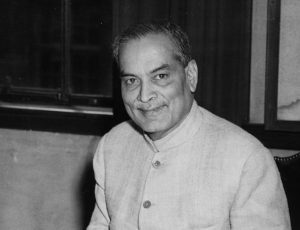
•The National Doctor’s Day also marks the birth and death anniversary of Dr Bidhan Chandra Roy. He was the one of the most renowned physician of India. He was also the second chief minister of West Bengal.

2) National Postal Worker Day: 1st July
•National Postal Worker Day is observed on 1st July every year. This day is celebrated to the recognition of postal workers across the world. National Postal Worker Day is a unique way to say ‘thank you’ to the postmen and all delivery personnel, as online shopping has become a lifeline for many of us.

•In India, amid the COVID-19 pandemic, postal services have uniquely diversified. Workers in postal departments have become the new ‘corona warriors’, playing an active role in India’s fight against COVID-19.

3) National Charted Accountants Day 2020

•National Charted Accountants Day or CA Day is celebrated on July 1 every year. This day is celebrated to commemorate the finding of the Institute of Chartered Accountants of India (ICAI) by the parliament of India in 1949. Every year on the day of the establishment of the ICAI, CA Day is celebrated to honour the Chartered Accountant.

4) MP Govt launches ‘Hamara Ghar-Hamara Vidyalaya’ campaign
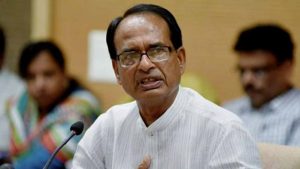
•Madhya Pradesh government has launched “Hamara Ghar-Hamara Vidyalaya” over a virtual platform to take care of academic regularity of the students during the Lockdown due to COVID-19 pandemic. The scheme will start on 6th July 2020.

5) GoI, Govt of TN & World Bank signs agreements for Housing projects

•Government of India, Government of Tamil Nadu and the World Bank has signed an agreement for two projects of worth $250 million. These projects would be executed to help low-income groups in the state of Tamil Nadu get access to affordable housing. The two projects includes $50 million Tamil Nadu Housing and Habitat Development Project, and $200 million First Tamil Nadu Housing Sector Strengthening Program. These projects will strengthen the Tamil Nadu’s housing sector policies, institutions, and regulations. The $200 million and $50 million loans from the International Bank for Reconstruction and Development (IBRD) will have a maturity of 20 years including a grace period of 3.5 years.

•The $200 million First Tamil Nadu Housing Sector Strengthening Program will aid the government’s ongoing efforts to expand the affordable housing availability. This would be done by gradually switching the role of the government from being the main provider to an enabler. It also seeks to unlock regulatory barriers along with incentivizing private sector participation in affordable housing for low-income families.

•The $50 million Tamil Nadu Housing and Habitat Development Project will support innovations in housing finance. It will also strengthen housing sector institutions in the state. Newly established Tamil Nadu Shelter Fund (TNSF) will also be financed by this project by providing an equity contribution of $35 million. TNSF is an innovation in housing finance in India.

6) Karnataka government launches portal “Skill Connect Forum”
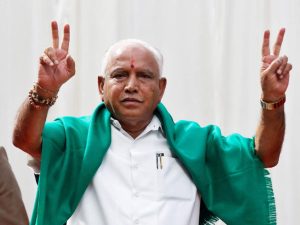


•Karnataka government has launched a portal called “Skill Connect Forum”. The portal seeks to connect job seekers with employers on a common platform. It also provides job seekers information on available jobs. Hence, the portal will bridge the gap between job seekers and the employers.

•Any individual can register on the “Skill Connect Forum” portal by uploading their details such as qualification, skill sets and other details. In the same manner, employers will also register on the portal which will match the requirement and availability. If a person is unemployed, he will be imparted a skill and then enabled to get a job.

7) India’s first Plasma Bank to be set up in Delhi
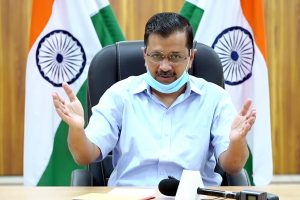
•The Delhi government will set up a first-of-its-kind ‘plasma bank’ in the country for treating COVID-19 patients. It will be set up at the Delhi government-run Institute of Liver and Biliary Sciences and doctors or hospitals will have to approach it for plasma if a COVID-19 patient needs the same. The plasma bank will start its operation by 2nd July 2020.

8) Gudni Th. Johannesson re-elected as President of Iceland

•Gudni Th. Johannesson has been re-elected as the President of Iceland. He has won his second four-year term as the president of Iceland in the presidential elections held recently. He won the presidential elections with 92% of the popular vote which the second-largest win in Icelandic presidential elections. While his counterpart Gudmundur Franklín Jónsson was only able to win 6.5% of the votes.

•In Iceland, Presidents are elected via direct popular vote, while each presidential term is of four years. Gudni Th. Johannesson worked as a history professor at the University of Iceland before taking office as President of Iceland in year 2016.

9) GoI extends KK Venugopal’s term as Attorney General of India
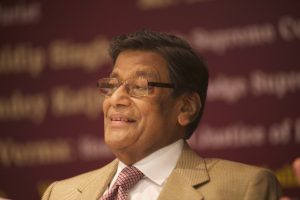
•Appointments Committee of the Cabinet (ACC), headed by Prime Minister Narendra Modi has approved the extension of KK Venugopal’s term as the Attorney General of India. KK Venugopal’s term has been extended for a period of one year with effect from 1st July 2020. His first term as attorney general of India commenced in July 2017 when he succeeded Mukul Rohtagi after his resignation from the post.

•ACC has also approved the reappointment of Solicitor General Tushar Mehta for a period of three years. ACC has also appointed Chetan Sharma as the Additional Solicitor General (ASG) for Delhi High Court. ACC has also re-appointed the existing five Additional Solicitor General (ASG) for another period of 3 years in the Supreme Court.

10) 36th ASEAN Summit virtually held in Vietnam
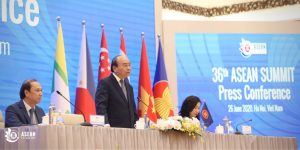
•The 36th edition of the biannual ASEAN (Association of Southeast Asian Nations)  Summit 2020 was held via video conferencing in Hanoi, Vietnam. The theme of the Summit was “Cohesive and Responsive ASEAN”.

•The main focus of the summit was on the COVID-19 epidemic response, post-pandemic recovery and further cooperation with partners. The 36th ASEAN summit was scheduled to be held in April 2020 in central Vietnam”s Da Nang, but was postponed due to the COVID-19 pandemic.

11) Former RBI Governor C Rangarajan conferred with 1st P C Mahalanobis Award
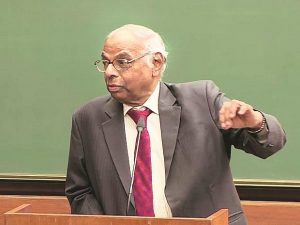
•Former Reserve Bank of India governor, Chakravarthi Rangarajan has been conferred with the first Prof. P C Mahalanobis Award in Official Statistics for lifetime achievements. He received the Lifetime Achievement Award for his contribution in providing solutions in the issues related to the estimation of national income.

•The award has been instituted by the Ministry of Statistics and Programme Implementation (MoSPI) from 2020, and will henceforth be awarded annually for the outstanding and meritorious contribution of an individual for the development and promotion of official statistics.



Read More

GS SCORE Constitutional Articles In News PDF

14:45
GS SCORE Constitutional Articles In News PDF


Click Here to download GS SCORE Constitutional Articles In News PDF
Click Here to Like our Facebook page for latest updates and free ebooks


Read More

Important Notice: Civil Services (Preliminary) Examination, 2020

14:40
An official update from UPSC regarding change of centres. 

NOTICE FOR THE CANDIDATES TO SUBMIT CHOICE OF  
CENTRE


The window of submitting the revised choice of Centres by the   candidates will be operational in two phases i.e. 7th-13th July,  2020 (06.00 PM) and 20th-24th July, 2020 (06.00 PM) on the Commission’s website https://upsconline.nic.in.
Click Here to download Important Notice: Civil Services (Preliminary) Examination, 2020
Click Here to Like our Facebook page for latest updates and free ebooks


Read More

The HINDU Notes – 01st July 2020

12:46


📰 Utilise MGNREGA to the fullest capacity

The scheme should not be diluted in the name of the Garib Kalyan Rojgar Abhiyaan

•The role of the Mahatma Gandhi National Rural Employment Guarantee Act (MGNREGA) as a lifeline for the working poor in rural India has been proved once again with the experience of the lockdown. In April and part of May, it was the absence of MGNREGA which accentuated rural distress. The Central government revised lockdown guidelines to allow MGNREGA work only from April 20, nearly a month after the nationwide lockdown was imposed, and released funds for it belatedly.

•But once the money reached the States, the results are evident. Whereas the number of households who got work in April 2020 was the lowest in several years at 95 lakh, in May the number went up to 3.05 crore. Till the third week of June, 2.84 crore households had got work, much higher when compared to the same months last year. With an average 23 days of work and a daily wage of Rs. 200, households who got work earned an average of Rs. 1,500 a month. Even though this is meagre, it shows the potential of MGNREGA to bring work and relief, provided it is further expanded.

•The Central government released Rs. 38,000 crore for MGNREGA work, of which 70% has already been utilised. With the return of migrant workers to their home States and with substantial numbers having completed the quarantine period, the demand for work is bound to increase. The remaining Rs. 8,000 crore fund available to the States is clearly insufficient. It is therefore essential for the Central government to release the second tranche without delay.

Work provided to few

•Even in these months where there has been a welcome increase in workers who got work, it is extremely disturbing that as many as 1.82 crore workers who demanded work were turned back. According to figures available on the Ministry’s website, in this fiscal year, 8.07 crore workers demanded work, but work was provided only to 6.25 crore workers. Recently we heard the Prime Minister and the Uttar Pradesh Chief Minister hardsell the record of employment provision in the State claiming that one crore jobs had been provided in a single day. This is certainly a novel interpretation of statistics. What is the nature of the work? Are they permanent jobs? Are they one-day jobs such as work on MGNREGA sites can be? In U.P., over one crore workers had applied for work under MGNREGA, but more than one third of them were turned back.

•Similarly in Bihar, which also has a large number of returning migrant workers, 12 lakh workers of the 41 lakh workers who applied were turned back. In spite of a legal provision of unemployment allowance not a single rupee in compensation has been paid. Now that the monsoons have set in, this issue becomes all the more relevant. During the rainy season even though demand is high, work provision is low. It is therefore essential for the Central government to ensure that States are provided with the funds to pay unemployment allowance to all workers demanding work.

•In this context of the need to strengthen MGNREGA, the announcement of the Central government’s “new” scheme, the Garib Kalyan Rojgar Abhiyaan, to provide work to migrant workers in 116 selected districts, raises several questions. First, what is the criteria for selection? Why, for example, should the States of West Bengal and Chhattisgarh be omitted when reverse migration is particularly high in these States? Of the Rs. 4,794 crore spent between June 20 and June 28, Bihar received more than 50% of the fund. As noted earlier, Bihar has had a poor record of implementation of MGNREGA. The Bihar elections are scheduled for later this year. It will be a terrible travesty of justice if this scheme is designed to serve a narrow political purpose.

•Second, according to the list of 25 kinds of work available under this “scheme” it is clear that almost every single one of them is already covered under the convergence programmes of MGNREGA. What is the new “skill mapping” required for this since this work is already covered under MGNREGA? The nature of the work is manual work, mainly construction and earth work, including work to lay cables, ostensibly to take Internet connections to rural areas. It is unstated but clear that this will benefit private telecom companies.

•Most importantly, how will this new scheme impact the MGNREGA work in these selected districts? There is no clarity on this critical issue in the set of guidelines issued by the Ministry of Rural Development, the nodal Ministry for this scheme. Last year, under MGNREGA, in these 116 districts taken together, an average of just 43.7 workdays were created, which was lower than the national average of 50 days. This poor record of provision of work may have been one of the reasons for the higher rates of migration from these districts. Instead of new schemes why should MGNREGA not be expanded to give work to all workers? This is a legal right, whereas the Garib Kalyan Rojgar Abhiyaan has no such legal binding on the administration.

•The scheme is primarily meant for migrant workers in those districts where their numbers are 25,000 or more. That means in these selected districts women who comprise a smaller percentage of migrant workers will be largely excluded. However, women in these districts had a high demand for work reflected in the fact that the average of women working in MGNREGA in these districts last year was 53.5%, which was higher than the average for the rest of India. So unless this work in 116 districts is in addition to MGNREGA, women will suffer.

Potential for MGNREGA

•MGNREGA should not be diluted in the name of the Garib Kalyan Rojgar Abhiyaan. The potential for MGNREGA to provide relief to the suffering of rural India should be utilised to its fullest capacity. This will also require a removal of the restriction of only one person per household to make every individual eligible. The cap of 100 days should be removed to expand it to at least 200 days. Unemployment allowance should be guaranteed for all those turned away from work. And importantly, the government must ensure the release of funds on an emergency basis.

📰 In ending stand-off, magnanimity must prevail

Read More

Ban on Chinese Apps - Rationale and Impact

08:30
Why in news?
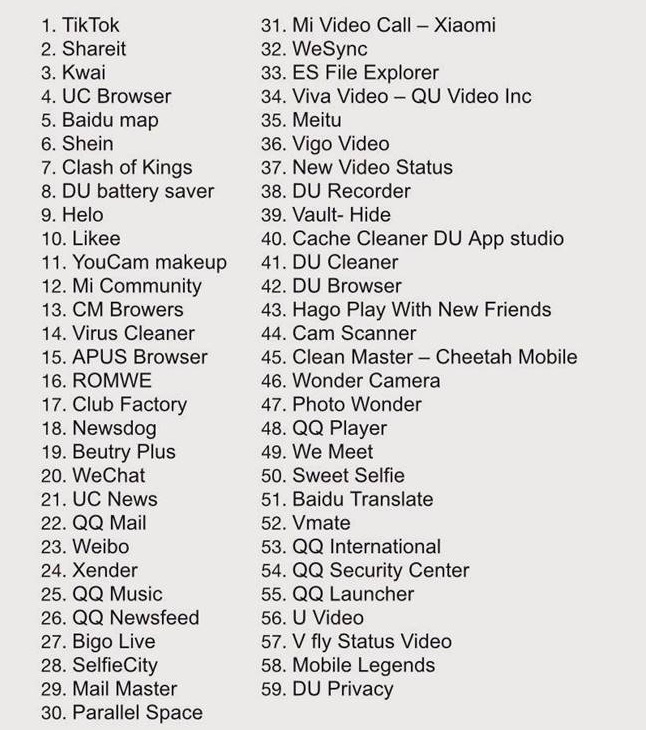
India has banned 59 apps originating from China, including very popular ones like the TikTok, UC Browser, ShareIt, and CamScanner.
What is the legal basis for India’s action?


  • The ban has been enforced under Section 69A of the Information Technology Act, 2000.
  • It offers the power to issue directions for blocking for public access of any information through any computer resource.
  • This is done in the interest of -
    1. sovereignty and integrity of India
    2. defence of India, security of the State
    3. friendly relations with foreign States
    4. public order (or)
    5. for preventing incitement to the commission of any cognizable offence relating to above
  • The Ministry of Information and Technology said that it has received many complaints in this regard.
  • There were reports on misuse of some mobile apps.
  • There was stealing and secretly transmitting users’ data in an unauthorised manner to servers that have locations outside India.
  • The notification is expected to be followed by instructions to Internet service providers to block these apps.
  • Users will soon see a message saying access to the apps has been restricted on the request of the government.
  • [The list of the banned apps is provided below]
What is the impact of the ban?
Read More

THE HINDU NEWSPAPER IMPORTANT ARTICLES 01.07.2020