Friday, July 03, 2020

Hong Kong’s National Security Law
VisionIAS
06:28
Why in news?
China has unveiled a new national security law for Hong Kong.
What is the new law?
- The new law was passed by the Chinese parliament unanimously.
- It was subsequently made a part of Hong Kong’s Basic Law.
- The law will greatly expand Beijing’s power in Hong Kong.
How does the new law target protesters?

World Investment Report
VisionIAS
06:27
Why in news?
The United Nations Conference on Trade and Development released its World Investment Report.
What does the report say?
- It projected that the Foreign direct investment (FDI) to the developing Asian economies could drop by as much as 45%.
- FDI is falling and the immediate picture for many countries is not looking pretty.
- One sector that is expected to buck this trend is digital services.
Why digital services are important?
ETHICS Complete Notes By S. Baliyan PDF
VisionIAS
06:23
ETHICS Complete Notes By S. Baliyan PDF


Click Here to download ETHICS Complete Notes By S. Baliyan PDF
Click Here to Like our Facebook page for latest updates and free ebooks
NEXT IAS Current Affairs Art & Culture Part-1 PDF
VisionIAS
06:14
NEXT IAS Current Affairs Art & Culture Part-1 PDF


Click Here to download NEXT IAS Current Affairs Art & Culture Part-1 PDF
Click Here to Like our Facebook page for latest updates and free ebooks
Thursday, July 02, 2020
Insights IAS Monthly Current Affairs Daily Quiz June 2020 PDF
VisionIAS
19:04
Insights IAS Monthly Current Affairs Daily Quiz June 2020 PDF


Click Here to download Insights IAS Monthly Current Affairs Daily Quiz June 2020 PDF
Click Here to Like our Facebook page for latest updates and free ebooks
Insights IAS Monthly Current Affairs June 2020 PDF
VisionIAS
19:01
Insights IAS Monthly Current Affairs June 2020 PDF


Click Here to download Insights IAS Monthly Current Affairs June 2020 PDF
Click Here to Like our Facebook page for latest updates and free ebooks
Daily Current Affairs, 02nd July 2020
VisionIAS
18:51

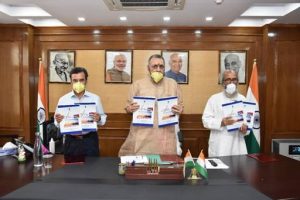
1) Giriraj Singh launches the 1st Edition of “Matsya Sampada”
2) Kerala announces ‘Dream Kerala Project’ aimed at aiding returning expats
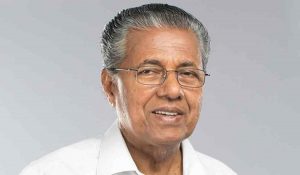
•Among the returnees, there are a large number of professionals from overseas and other parts of the country. The project also aims to harness their potential for the future of the state. The project, to be jointly implemented by various departments of the state government, will provide the public with an opportunity to give suggestions and ideas on the future of Kerala.
3) Pak Army appoints Nigar Johar as 1st female Lt. General

•Johar graduated from the Army Medical College, Rawalpindi, in 1985 and joined the army’s Medical Corps. In 2017, she became the third woman officer in the Pakistan Army to attain the rank of major general. The other two women major generals were Shahida Badsha and Shahida Malik.
4) Fitch cuts India’s GDP growth forecast to 8% from 9.5% for FY22
5) Shrikant Madhav Vaidya becomes new chairman of IOC
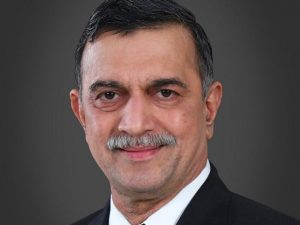
•Vaidya will also be the chairman of Chennai Petroleum Corporation Ltd, a stand-alone refining subsidiary of IOC, and Indian Oiltanking Ltd, a joint venture providing terminalling services. He will also take over as the head of Ratnagiri Refinery & Petrochemicals Ltd and also be a director on the board of Petronet LNG Ltd. He has had a decade-long association with India’s largest cracker plant—the Panipat Naphtha Cracker Complex.
6) Ravinder Bhakar becomes new CEO of CBFC
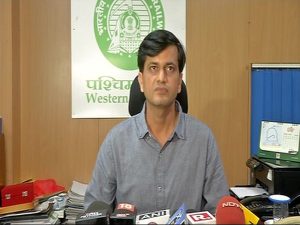
•Prior to this, Bhakar was posted as the Secretary & Chief Public Relations Officer of Western Railways. He also served as an Indian Engineering Services officer. He has received many awards including the National award from Minister of Railways for outstanding service & General Manager Award both in Western Railways & Central Railways (CR) for exemplary service.
7) Shashank Manohar quits as ICC Chairman
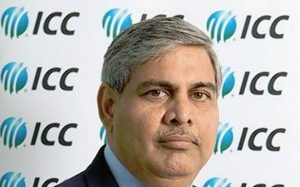
•As per the ICC rules, Manohar could have stayed for another two-year-term as a maximum of three terms is allowed. But, he decided not to continue ahead of the all-important ICC meeting. As per reports, England’s Colin Graves is the frontrunner to succeed Manohar but recently, former Cricket West Indies chief Dave Cameron has also joined the race recently.
8) India appoints Indra Mani Pandey as new envoy to UN bodies
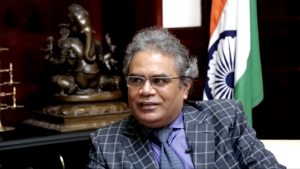
•Pandey will also represent India at International Labour Organisation, Universal Postal Union, one among the oldest arm of UN that even predates UN, International Union for Conservation of Nature (IUCN), International organization for Standardization (ISO), World Meteorological Organisation (WMO), World property Organisation, International Parliamentary Union, United Nations Office for the Coordination of Humanitarian Affairs.
9) HDFC Bank launches ‘e-Kisaan Dhan’ app for farmers

10) Ravindra Jadeja named India’s ‘most valuable player’ by Wisden

•Jadeja’s MVP rating is around 97.3 which is second only to Muttiah Muralitharan of Sri Lanka making him the second most Valuable Test Player of the 21st Century. Wisden used CricViz, a detailed analysis tool in cricket to analyse his performance.
The HINDU Notes – 02nd July 2020
VisionIAS
11:03

📰 Reforming India’s digital policy
The country needs to attract FDI and advance its goal of becoming a $5 trillion economy
•With COVID-19 continuing to extend its reach globally, economic growth has plunged, and the competition for foreign investment is intensifying, spurred on by national campaigns to shift supply chains and the urgent necessity to reverse recessionary trends. Foreign direct investment (FDI) is falling and the immediate picture for many countries is not looking pretty. The United Nations Conference on Trade and Development just released its latest World Investment Report and projected that FDI to developing Asian economies could drop by as much as 45%.
•One sector that is expected to buck this trend is digital services. Now more than ever, it is clear that digital services have become critical to every 21st century economy. Quite literally, digital services are filling gaps when national or global emergencies interrupt more traditional modes of commerce. Digital services enable access to and delivery of a wide array of products across multiple sectors, from healthcare to retail distribution to financial services.
•Even in the midst of the COVID-19 pandemic, investments in digital services continue to flow at record levels globally, outpacing investment in nearly every other sector. India is an ideal destination for increased FDI flows in the digital services sector and offers undeniable potential for innovative homegrown start-ups not least because of its huge and increasingly digitised population. However, Indian government policies will be key determinants in how quickly and at what level the Indian economy attracts new investment, fosters Indian innovation, and expands its exporting prowess.
Three pending measures
•Currently, there are three pending reform measures under consideration that are likely to affect India’s growth trajectory in digital services for years to come — the Personal Data Protection Bill (PDPB), the e-commerce policy, and the Information Technology Act Amendments. Approaches in these regulatory reform efforts seem to emphasise a focus on protecting the domestic market for domestic companies and prioritising government access to data. It may be difficult to reconcile these approaches with India’s strong interest in promoting data privacy, protecting its democratic institutions, and encouraging FDI and India’s position as a global leader in information technology. Understandably, there is uncertainty about when these changes will be completed and implemented.
•Also, the course of the India-U.S. trade relationship is uncertain, as signs of progress are continually interrupted by setbacks in the form of new restrictions.
•The bilateral relationship is an important factor in realising the potential for greater trade and investment in digital services. The strategic relationship has been growing, reflecting how their historic ties have evolved over time. Where the relationship has lagged is with respect to trade. India and the U.S. are yet to conclude negotiation on a bilateral trade agreement that could address some digital services issues, and the U.S. just initiated a “Section 301” review of whether digital services taxes in 10 countries constitute “unfair” trade measures, including India’s equalisation levy.
•As India resumes its efforts to put into place a new architecture for digital services and as it pursues opportunities to attract new investment, the government and stakeholders might consider the full range of implications for the long-term. How might new policies affect India’s ability to attract foreign investment? How might these policies promote innovation through increased competition and create an environment that is friendly towards homegrown start-ups? Ultimately, what policies can best advance the objective of becoming a $5 trillion economy?
•India will be host of the G20 nations in 2022, and it appears clear that post-COVID-19 international cooperation and approaches to good governance in the digital sphere will be top-priority initiatives. The steps India takes now could well establish itself as a true global leader.
📰 How not to tame the digital dragon
