VISION

Material For Exam

Recent Update

Wednesday, July 22, 2020

Daily Current Affairs, 22nd July 2020

19:10


1) Consumer Protection Act, 2019 comes into force in India

•The Consumer Protection Act, 2019 has been implemented in India since 20th July 2020. It has replaced Consumer Protection Act, 1986. The new act has been introduced to offer protection to buyers from traditional sellers as well as from the new e-commerce retailers/platforms. It will protect the consumer rights through its various notified Rules and provisions and will empower consumers and hence help them in protecting their rights.

•Some of the features of the Consumer Protection Act, 2019 includes Consumer Protection Councils, Consumer Disputes Redressal Commissions, Mediation, Product Liability and punishment for manufacture or sale of products containing adulterant / spurious goods. It also involves the setting up of the Central Consumer Protection Authority (CCPA) which will aim to promote, protect and enforce the rights of consumers. It will also conduct investigations into violations of consumer rights and institute complaints / prosecution. It will also conduct investigations into violations of consumer rights and institute complaints / prosecution. It will also order recall of unsafe goods and services as well as discontinuance of unfair trade practices and misleading advertisements.

2) SpaceX launches South Korea’s 1st military satellite “ANASIS-II”

•SpaceX has successfully launched South Korea’s first military satellite “ANASIS-II”. The satellite was deployed into a geostationary transfer orbit (GTO) by a Falcon 9 rocket. It was launched from the Cape Canaveral Air Force Station in the US of Florida.

•With this launch, South Korea has become the 10th country to own a military-only communications satellite, which will provide permanent and secured military communications. The satellite is expected to reach its orbit of 36,000 kilometres in 2 weeks. South Korea’s military will take over the system in October after testing.

3) Rare yellow turtle discovered in India
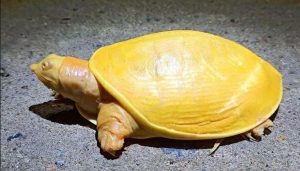
•In Odisha’s Balasore district, a farmer Basudev Mahapatra has spotted a turtle which is yellow in colour and according to the experts, it is the product of albinism. The turtle is known as the “Indian flap shell turtle”. The turtle is commonly found in Pakistan, Sri Lanka, India, Nepal, Bangladesh and Myanmar. It is omnivorous and its diet consists of frogs, snails and even some aquatic vegetation.

What is Albinism?

•Albinism is a type of genetic disorder where it is little or no production of pigment in the skin, eyes, and hair or in other species in the fur, feathers, or scales.

4) India & US conducts Passage Exercise in Indian Ocean

•Indian Navy has conducted a Passage Exercise (PASSEX), a high-end joint naval exercise with the US Navy in the Indian Ocean. The Passage Exercise has been designed to maximize training and interoperability, including air defense.

•PASSEX featured the participation of four Indian naval ships, including a stealth corvette which teamed up with USS Nimitz along with Ticonderoga-class guided missile cruiser USS Princeton (CG 59) and Arleigh Burke-class guided missile destroyers USS Sterett (DDG 104) and USS Ralph Johnson (DDG 114) in the Eastern Indian Ocean. Indian navy cited the PASSEX as an opportunity to improve interoperability on the high seas.

5) Indian Army gets ‘Bharat’ drones for accurate surveillance
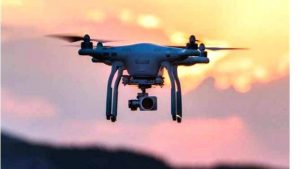
•Defence Research and Development Organisation (DRDO) has provided drones named ‘Bharat’ to the Indian Army. The indigenously developed drones are sent in order to provide accurate surveillance along the Line of Actual Control in high altitude and mountainous terrains of Eastern Ladakh.


6) Ramesh Boddu appointed as MD & CEO of Karur Vysya Bank
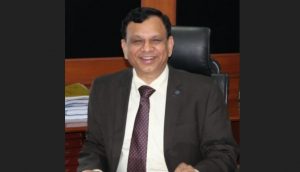
•Board of Directors of the Karur Vysya Bank has appointed Ramesh Babu Boddu as a Managing Director & Chief Executive Officer of the bank. He has also been co-opted as an Additional Director.

•The appointment of Ramesh Babu Boddu has been made for a period of three years from the date of taking charge. He will succeed PR Seshadri who resigned on 31st March 2020. Ramesh Babu Boddu has earlier served as Deputy Managing Director in State Bank of India and retired in April 2020.

7) Oxford Covid-19 vaccine’s human trial shows positive result
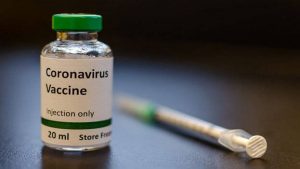
•The human trial of COVID-19 vaccine candidate developed by the University of Oxford and backed by AstraZeneca Plc has shown a positive result. The researchers found their experimental COVID-19 vaccine produced a dual immune response in people aged 18 to 55. Oxford’s vaccine is designed to reduce disease and transmission. Director at the Jenner Institute of Oxford University, Dr Adrian Hill, explains the mechanism of this vaccine “this vaccine triggers both arms of the immune system”.

8) CSIR-CMERI unveils COVID Protection System (COPS) for Workplace
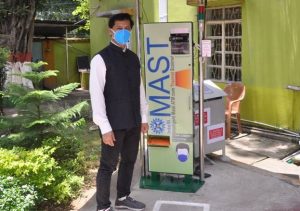
•The COVID Protection System (COPS) for Workplace has been unveiled by the CSIR-CMERI, Durgapur. The COPS for Workplace comprises of three units namely contactless Solar Based Intelligent Mask Automated Dispensing Unit cum Thermal Scanner (IntelliMAST), Touchless Faucet (TouF) and 360° Car Flusher.

9) CBIC has signed MoU with CBDT for data exchange
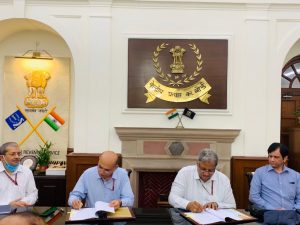
•The Central Board of Direct Taxes (CBDT) has signed an MoU with the Central Board of Indirect Taxes and Customs (CBIC) to facilitate smoother bilateral exchange of data. According to the MoU, both the organisations will share data and information with each other on an automatic and regular basis. They will also share any information available in their respective databases which may be useful for the other organisation.

•Signing of the MoU also marks the beginning of a new era of cooperation between the CBDT and CBIC. This MoU will also supersede the MoU signed between CBDT and the erstwhile Central Board of Excise and Customs (CBEC) in the year 2015.

10) India-Maldives sign agreement to establish “Emergency Medical Services”
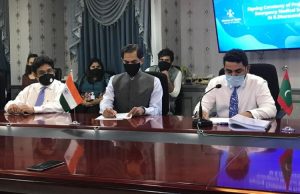
•India and Maldives have signed an agreement for the establishment of ‘Emergency Medical Services’ in Male, Maldives. The Emergency Medical Service is financed by India under grant assistance of 20 million USD for neighbouring countries. This will help to increase the collaboration between the countries, especially in the areas of health care facilities, disaster responses during critical times, etc.

11) Arnab Chaudhuri to receive Toonz Media Award
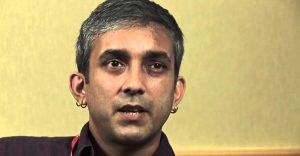
•The ‘Legend of Animation’ award instituted by the Toonz Media Group (TMG) as part of the Animation Masters Summit (AMS) 2020 – Digital Edition will be posthumously conferred to the legendary animation director Arnab Chaudhuri. The award is being presented for his invaluable contribution to the animation and entertainment industry of India.

•Arnab, who passed away on December 25, 2019, was one of the pioneers of the Indian Animation industry, and his animation movie ‘Arjun: The Warrior Prince’ is the only animation from India to date to be longlisted for Oscar awards.

12) Indian Air Force Commanders’ Conference begins in Delhi

'
•Raksha Mantri Rajnath Singh has inaugurated the Air Force Commanders’ Conference (AFCC) at Air Headquarters (Vayu Bhawan) New Delhi. The conference will be held with the theme “IAF in the Next Decade”.

•AFCC is a three days conference which will be chaired by the Chief of the Air Staff (CAS), Air Chief Marshal RKS Bhadauria. The plan of action for operational capability enhancement of the IAF in the next decade would be deliberated during the conference. The participants of the conference would also take stock of the current operational scenario and deployments.


Read More

How India’s map has evolved since 1947

12:51
Seventy-two years after India won Independence on 15 August 1947, the country’s internal boundaries continue to change, with the announcement of the creation of two new Union territories (UTs) by bifurcating the state of Jammu and Kashmir earlier this month.


While the latest move by the Union government to convert a state into two UTs is unprecedented and remains mired in controversy, India’s internal boundaries have undergone continuous evolution over the past seven decades, as the charts below show.
The biggest reorganization of India’s internal boundaries occurred in 1956 when an official States Reorganization Act was implemented.
Read More

The HINDU Notes – 22nd July 2020

12:42


📰 Towards robust data regulation

The non-personal data committee’s data governance framework raises many questions

•For a country that does not have a personal data protection bill, the setting up of a committee to regulate non-personal data seems premature. However, there is global realisation that data should be unlocked in public interest beyond the sole service of commercial interests of a few large companies. There is also recognition that data, in many cases, are not just a subject of individual decision-making but that of communities, such as in the case of ecological information. Therefore, it is critical that communities are empowered to exercise some control over how the data are used. On July 12 the NPD committee released a governance framework which raises many concerns.

Key stakeholders

•To enable a robust regulation of NPD, the report defines key stakeholders for the ecosystem. First are data principals, who/ which can be individuals, companies or communities. The roles and rights of individuals and companies in the context of data governance are well understood. However, the idea of communities as data principals is introduced ambiguously by the report. While it provides examples of what might constitute a community, e.g. citizen groups in neighbourhoods, there is little clarity on the rights and functions of the community. The report does not problematise the ways in which communities translate offline inequalities and power structures to data rights. There are examples in indigenous data governance, which imagine collective rights and community-personhood on data-related issues, which may have found useful mention here.

•Next are data custodians, who undertake collection, storage, processing, and use of data in a manner that is in the best interest of the data principal. The details in this section are fuzzy – it is not specified if the data custodian can be the government or just private companies, or what best interest is, especially when several already vague and possibly conflicting principal communities are involved. It is also not clear how communities engage with the custodian. Further suggestion that data custodians can potentially monetise the data they hold is especially problematic as this presents a conflict of interest with those of the data principal communities. Based on current literature, data custodians can be interpreted as data stewards, imagined in many cases as independent entities that intermediate with technology companies on behalf of communities, which they represent.

Unclear relationship

•Next, the report talks about data trustees as a way for communities to exercise data rights. Trustees can be governments, citizen groups, or universities. However, the relationship between the data principal communities and the trustees is not clear. The articulation of trustees does not explain how “trust” is extended and fructified with the community, and how trustees are empowered to act on behalf of the community. The idea of trusteeship for data is being discussed globally — the principles of a legal trust and the fiduciary responsibility that come with it are critical. Trustees, by definition, are bound by a duty of care and loyalty towards the principal and thus work in their best interests, negotiating on behalf of their data rights with technology companies and regulators. This thinking is not reflected in the report.

•Finally, the report explains data trusts comprising specific rules and protocols for containing and sharing a given set of data. Trusts can hold data from multiple custodians and will be managed by public authority. The power, composition and functions of the trust are not established. One possible way to simplify the ecosystem would be to consider data trusts as a type of custodian, such that fiduciary responsibilities can be extended, and trustees can represent the community and act on behalf of the data principals.

•The committee should organise broader consultations to ensure that the objective of unlocking data in public interest and through collective consent does not end up creating structures that exacerbate the problems of the data economy and are susceptible to regulatory capture.

📰 The COVID-19 fiscal response and India’s standing

Read More

How to Score 140+ in Prelims? UPSC IAS Topper Saurabh Dixit (AIR 162 / CSE 2016) First Attempt

09:53
UPSC IAS TOPPER STRATEGY 
Saurabh Dixit
AIR 162, CSE 2016
First Attempt, No Coaching

This Article is a Part of Series of Articles written by Saurabh Dixit who has secured AIR 162, CSE 2016 with self study in the very First Attempt.
Read More

Sriram's IAS World History Notes PDF

09:50


Sriram's IAS World History Notes PDF


Click Here to download Sriram's IAS World History Notes PDF
Click Here to Like our Facebook page for latest updates and free ebooks


Read More

THE HINDU NEWSPAPER IMPORTANT ARTICLES 22.07.2020

NEXT IAS Prelims 2020 Current Affairs ++ Internal Security PDF

06:34
NEXT IAS Prelims 2020 Current Affairs ++ Internal Security PDF


Click Here to download NEXT IAS Prelims 2020 Current Affairs ++ Internal Security PDF
Click Here to Like our Facebook page for latest updates and free ebooks


Read More

GS Score Weekly Current Affairs July 2020 Week 04 PDF

06:26

GS Score Weekly Current Affairs July 2020 Week 04 PDF


Click Here to download GS Score Weekly Current Affairs July 2020 Week 04 PDF
Click Here to Like our Facebook page for latest updates and free ebooks


Read More

Tuesday, July 21, 2020

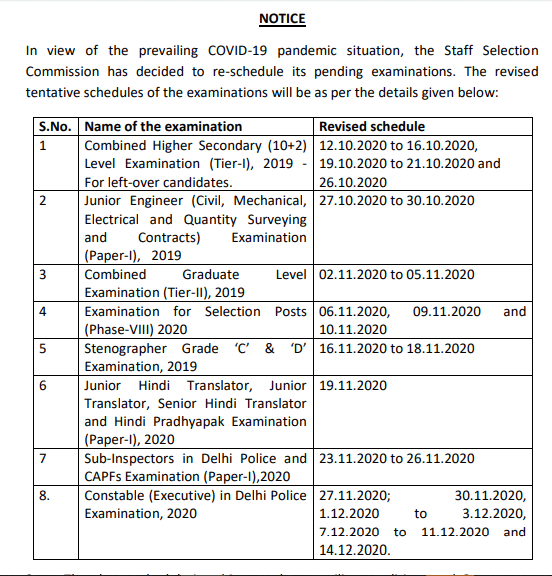
SSC Exam Calendar 2020-2021: Check Revised Exam Date

19:20

SSC Exam Calendar 2020-2021: Check Revised Exam Date (Again)


Click Here to download Official SSC Revised Dates 2020-2021: Released on 21st July
Click Here to Like our Facebook page for latest updates and free ebooks


Read More

Sociology Strategy by Anu Kumari Rank – 2 (CSE-2017)

17:59
Firstly let me tell you that when I started preparing, I had never thought that I would be penning down my thoughts to help fellow aspirants some day. So, its a great feeling, a surreal one.. and feel really blessed that my thoughts can help someone. Earlier, when I used to read other toppers’ strategies, I found it hard to believe when they used to say that they never expected getting a good rank. I would think ..no no ..they must have been really good at preparation/studies etc and must have been aware of their intellect and quite confident of their success. But trust me, with the benefit of hindsight; I can say that when we start, we start with self doubt, lack of confidence, fears and uncertainties. Quite quite possible, one of you reading this strategy here will emerge as a top ranker next year.
So, I would say- start wherever you are, at whatever stage you are, full of apprehension, full of self doubt or lacking self belief BUT remember the only way you can go is UP..higher and higher….and that is doable when you are ready to slog yourself, work diligently and remain optimistic.
Read More