VISION

Material For Exam

Recent Update

Tuesday, May 05, 2020

Daily Current Affairs, 05th May 2020

17:21


1) International Day of the Midwife: 5 May

•International Day of the Midwife is observed globally on 5 May every year since 1992. This day is celebrated to recognise the work of midwives and raise awareness about the status of midwives for the essential care they provide to mothers and their newborns.

•The theme for 2020 International Day of the Midwife is Midwives with women: celebrate, demonstrate, mobilise, unite – our time is NOW!.

•The World Health Organization (WHO) has designed the year 2020 as ‘Year of Nurse and Midwife’ to commemorate the 200th birth anniversary of nursing pioneer Florence Nightingale.

2) World Hand Hygiene Day observed globally on 5 May

•The World Health Organization (WHO) has marked 5 May as World Hand Hygiene Day. This day is recognising the role clean and safe hands play in warding off many serious infections. It is also known as Hand Hygiene Day.

2020 Campaign Objectives

•The theme of the campaign is “SAVE LIVES: Clean Your Hands”. The main goal of the Global Hand Hygiene Day campaign is to recognize that handwashing is one of the most effective actions you can take to reduce the spread of pathogens and prevent infections, including the COVID-19 virus. Health workers and community members alike can play a role in preventing infections by practising regular and frequent handwashing.

Under the 2020 campaign, WHO and partners aim to:

•Make hand hygiene a global priority

•Inspire hand hygiene and behaviour change

•Engage with health care workers in their role in clean care and the prevention of infections.

3) World Asthma Day 2020 observed globally on 5 May

•World Asthma Day is observed every year on the 1st Tuesday of May. This year, World Asthma Day is observed on May 5, 2020. The day spread awareness about asthma disease and care around the world.  Whilst the primary focus is supporting the person with asthma, support may also extend to family, friends and caregivers. The theme for 2020 is ‘Enough Asthma Deaths’.


History of World Asthma Day:

•World Asthma Day is annually organized by the Global Initiative for Asthma (GINA). In 1998, first World Asthma Day was celebrated in more than 35 countries in conjunction with the first World Asthma Meeting in Barcelona, Spain.

What is Asthma?

•Asthma is a chronic disease of the lungs which causes breathing problems. Symptoms of asthma include breathlessness, coughing, wheezing and a feeling of tightness in the chest. These symptoms vary in frequency and severity. When the symptoms are not under control, the airways can become inflamed making breathing difficult. Whilst asthma cannot be cured, the symptoms can be controlled enabling people with asthma to live full lives

4) HP govt to starts “Mukhya Mantri Shahari Rojgar Guarantee Yojna”
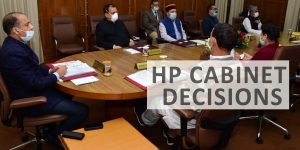
•The cabinet of Himachal Pradesh decided to starts the “Mukhya Mantri Shahari Rojgar Guarantee Yojna”. In this Yojna, 120 days” assured employment will be provided to people living in urban areas. It is being launched to revive the coronavirus-hit economy of the state. Adequate training will be given to the people for their skill upgrade if required. The cabinet also decided to provide an assistance of Rs 2,000 to each of the 1 lakh workers registered under the Building and Other Construction Workers Board.

5) Russia plan to launch 1st satellite to monitor Arctic climate in 2020

•Russia has planned to launch the 1st satellite named Arktika-M to monitor the Arctic climate and environment later this year. Arktika-M 1 spacecraft has been developed and is undergoing radio-electronic testing. This satellite is planned to launch at the end of 2020. The launch will take place on Soyuz -2,1b carrier rocket with frigate booster.

What is Arktika-M?

•Arktika-M is a remote-sensing and emergency communications satellites which will allow improving weather forecasts and will enable scientists to better study climate change in the Arctic region. Through the launch of the satellites, Russia aims to develop a unique satellite network dedicated to monitoring the weather conditions of the Arctic region.

6) Indian journalists wins Pulitzer Prize 2020 in feature photography

•Indian journalists namely Dar Yasin, Mukhtar Khan and Channi Anand have been honoured with the 2020 Pulitzer Prize. These journalists have won the award in the field of feature photography. All the three journalists belongs to Associated Press. They have been awarded for the lockdown coverage.

•The Pulitzer announced that the Indian journalists have been awarded for the contested territory of Kashmir as India revoked its independence, executed through a communications blackout. The Pulitzer Prize is considered as the highest honour that United States-based journalists and organisations can receive.

7) Dr Harsh Vardhan launches multimedia guide ‘COVID Katha’

•Union Health Minister Dr Harsh Vardhan has launched a multimedia guide on the Covid-19 disease named ‘COVID Katha’. The guide is launched on the occasion of the 50th DST (Department of Science and Technology) Foundation Day.

•“COVID Katha” provides consolidated and authentic information on the global crisis to the masses in an interesting and interactive mode, the National Council for Science & Technology Communication (NCSTC), Department of Science and Technology (DST), Government of India in association with Dr Anamika Ray Memorial Trust (ARMT), an educational and research organization, has brought out multimedia guides carrying important information on A-to-Z of COVID 19.

8) Prime Minister takes part in online Summit of NAM Contact Group
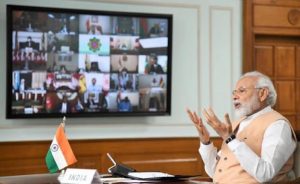
•Indian Prime Minister Narendra Modi took part in the online Summit of Non Aligned Movement (NAM) Contact Group. The summit was held with an objective to discuss response to the ongoing COVID-19 pandemic crisis as well as to promote international solidarity in the fight against the COVID-19 pandemic. The summit was hosted by the current Chairman of NAM, President of Republic of Azerbaijan HE Ilham Aliyev, with the theme “United against COVID-19”.

•The online Summit of NAM Contact Group featured the participation of over 30 Heads of State and Government and other leaders, including from member States in Asia, Africa, Latin America as well as the Caribbean, and Europe. During the summit, the impact of COVID-19 was assessed by the NAM Leaders. They also identified the needs and requirements for viable remedies and stressed on action-oriented follow-up measures. The NAM leaders leaders accepted a Declaration underlining the relevance of international solidarity in the fight against COVID-19. The formation of ‘Task Force’ was also announced in order to achieve the above objectives.



Read More

GS SCORE Target PT 2020 Science and Technology PDF

12:20

GS SCORE Target PT 2020 Science and Technology PDF


Click Here to download GS SCORE Target PT 2020 Science and Technology PDF
Click Here to Like our Facebook page for latest updates and free ebooks


Read More

The HINDU Notes – 05th May 2020

12:14


📰 A grain stockist with a role still relevant

In the middle of the pandemic, the FCI holds the key to warding off a looming crisis of hunger and starvation

•For several years now, the Food Corporation of India (FCI) has drawn attention for all the wrong reasons. Set up under the Food Corporations Act 1964, in its first decade, the FCI was at the forefront of India’s quest of self-sufficiency in rice and wheat following the Green Revolution, managing procurement and stocking grain that supported a vast Public Distribution System (PDS).

•Over time, however, many began to see it as a behemoth that had long outlived its purpose. Its operations were regarded as expensive and inefficient, a perception that has come to be accepted as fact. Even in the 1970s and 1980s, poor storage conditions meant a lot of grain was lost to pests, mainly rats; diversion of grain was widespread, prompting a former chairman to declare that there was a problem with “human rats” as well. By the late 1990s, the FCI was often referred to as the “Food Corruption of India”, not entirely facetiously.

Why it is better placed

•Notwithstanding its dubious reputation, the FCI has consistently maintained the PDS, a lifeline for vulnerable millions across the country. Today, in the middle of the COVID-19 pandemic, it holds the key to warding off a looming crisis of hunger and starvation, especially in regions where lakhs of migrant workers have returned with little in hand by way of money or food. Before the lockdown, many experts had observed that with 77 million tonnes of grains in its godowns and on the eve of a new round of procurement — of a bumper harvest of wheat — the FCI was facing a serious storage problem. This was worrying not just because of a shortage of modern storage facilities but also because the FCI lacked a “pro-active liquidation policy” for excess stocks. Today, this concern has all but disappeared, even if only temporarily, and many have called for opening up the godowns to release food stocks to those affected by the lockdown.

•As of April 13, 2020, the FCI had already moved 3 million tonnes (post-lockdown), to States, including Uttar Pradesh, Bihar, West Bengal and Karnataka and those in the Northeast, where demand outstrips within State procurement and/or stocks. The FCI has also enabled purchases by States and non-governmental organisations directly from FCI depots, doing away with e-auctions typically conducted for the Open Market Sale Scheme (OMSS). With rabi procurement under way in many States, it seems that the country will secure ample food supplies to cope with the current crisis. Given the extended lockdown, the FCI is uniquely positioned to move grain across State borders where private sector players continue to face formidable challenges. With passenger rail and road traffic suspended, grain can move quickly without bottlenecks. Yet, there is a widespread sense that the FCI is simply not moving fast enough and could do much more.

•First, the FCI is overwhelmingly reliant on rail, which has several advantages over road transport. In 2019-2020 (until February) only 24% of the grain moved was by road. The FCI has, however, long recognised that road movement is often better suited for emergencies and for remote areas. Containerised movement too, which is not the dominant way of transporting grain, is more cost-effective and efficient. Now, more than ever, it is imperative to move grain quickly and with the least cost and effort, to areas where the need is greatest.

Positioning strategy

•Second, given that the coming months will see predictable demand of staples from food insecure hotspots where migrant workers have just returned or where work is scarce, one strategy that has been adopted widely in international food aid by the United States, for example, is “pre-positioning” shipments, where grain is stored closer to demand hotspots. The FCI already has a decentralised network of godowns. In the current context, it would be useful for the State government and the FCI to maintain stocks at block headquarters or panchayats in food insecure or remote areas, in small hermetic silos or containers; this would allow State governments to respond rapidly, not to mention the sense of assurance and psychological comfort that it will offer vulnerable communities. This is especially relevant for regions that are chronically underserved by markets or where markets have been severely disrupted.

•Third, there is a strong case for the central government to look beyond the PDS and the Pradhan Mantri Garib Kalyan Yojana and release stocks over and above existing allocations, but at its own expenses rather than by transferring the fiscal burden to States. Along with a prepositioning strategy, this would provide flexibility to local governments to access grains for contextually appropriate interventions at short notice, including feeding programmes, free distribution to vulnerable and marginalised sections, those who are excluded from the PDS, etc.; it also allows freedom to panchayats, for example, to sell grain locally at pre-specified prices until supply is restored. In many States, there is a vibrant network of self-help groups formed under the National Rural Livelihoods Mission (NRLM) which can be tasked with last mile distribution of food aid other than the PDS. Consultative committees presumably exist already in each State to coordinate with the FCI on such arrangements.

•Fourth, typically, the FCI’s guidelines follow a first in, first out principle (FIFO) that mandates that grain that has been procured earlier needs to be distributed first to ensure that older stocks are liquidated, both across years and even within a particular year. It is time for the FCI to suspend this strategy, if it has not already, that enables movement that costs least time, money and effort.

•Fifth, today farmers across the country growing for markets are seeking to reach out to consumers directly, many out of sheer despair. In many places, farmer producer organisations (FPOs) have been at forefront of rebuilding these broken supply chains. The FCI along with the National Agricultural Cooperative Marketing Federation of India Ltd. (NAFED), is well placed to rope in expertise to manage the logistics to support these efforts. NAFED has already taken the initiative to procure and transport horticultural crops. Several State governments too have put in systems to procure horticultural crops. The FCI should similarly consider expanding its role to support FPOs and farmer groups, to move a wider range of commodities including agricultural inputs such as seeds and fertilizers, packing materials and so on.

•There are two major concerns that many articulate regarding the FCI’s role. The first is a long-term concern regarding the costs of food subsidy. An analysis of FCI costs spanning 2001-16 suggests, however, that on average about 60% of the costs of acquisition, procurement, distribution and carrying stocks are in fact transfers to farmers. Not all of what is counted as subsidy therefore represents a waste of resources, even if the distributional consequences and inefficiencies leave a lot to be desired. At the same time, the government needs to address the FCI’s mounting debts — an estimated ₹2.55 lakh crore in March 2020 in the form of National Small Saving Funds Loan alone — and revisit its current preference for not liquidating these in order to contain the Union government’s fiscal deficit. Some clarity on this aspect would enable the government to be bolder with deploying the FCI in the best possible way. A second concern is that extended food distribution of subsidised grain is akin to dumping and depresses food prices locally, in turn affecting farmers. These are legitimate concerns but perhaps only beyond the looming emergency this summer.

•When the pandemic is past, questions will once again surface on the relevance of the FCI. Even in 2015, the Shanta Kumar report recommended repurposing the organisation as an “agency for innovations in Food Management System” and advocated shedding its dominant role in the procurement and distribution of grain. There is no doubt that the FCI needs to overhaul its operations and modernise its storage. At the same time, the relevance of an organisation such as the FCI or of public stockholding, common to most Asian countries, has never been more strongly established than now, even as we contemplate its new role in a post-pandemic world.

📰 MPLADS, its suspension, and why it must go

Read More

THE HINDU NEWSPAPER IMPORTANT ARTICLES 05.05.2020

From Article 1 to Article 51 (Indian Polity Sure Success MCQ) by Sanjay Kumar Rahi PDF

06:16


From Article 1 to Article 51 (Indian Polity Sure Success MCQ) by Sanjay Kumar Rahi PDF


Click Here to download From Article 1 to Article 51 (Indian Polity Sure Success MCQ) by Sanjay Kumar Rahi PDF
Click Here to Like our Facebook page for latest updates and free ebooks


Read More

Monday, May 04, 2020

Vision IAS Monthly Current Affairs March 2020 [Hindi Medium] pdf Download

18:50


Vision IAS Monthly Current Affairs MARCH 2020 [Hindi Medium] pdf Download


Click Here to download Vision IAS Current Affairs March 2020 in Hindi pdf
Click Here to Like our Facebook page for latest updates and free ebooks


Read More

Daily Current Affairs, 04th May 2020

18:35


1) World Press Freedom Day observed globally on 3 May
•World Press Freedom Day is observed globally on 3 May every year. It is also known as World Press Day. The day also pays tribute to journalists who have lost their lives. They risk their lives at times or may even have to face tough situations in order to bring the news from different corners of the world in front of the public.

•The theme of World Press Freedom Day 2020 is “Journalism without Fear or Favour”.

2) International Firefighters’ Day observed globally on May 4


•International Firefighters’ Day is observed globally on May 4 every year. This day is celebrated since 1999, to recognise and honour the sacrifices that firefighters make to ensure that their communities and environment are as safe as possible. The day was instituted, after the deaths of five firefighters in tragic circumstances in a bushfire in Australia on 2 December 1998.

3) CAIT to roll out National e-commerce marketplace ‘bharatmarket’
•A National e-commerce marketplace ‘bharatmarket’ will be launched by the traders’ body Confederation of All India Traders (CAIT). The national platform ‘bharatmarket’ will be launched for all retail traders, by CAIT in collaboration with several technology partners.

4) NIUA & NMCG organizes IDEAthon on ‘The Future of River Management’
•The National Mission for Clean Ganga (NMCG) under the Ministry of Jal Shakti has jointly organised an IDEAthon on “The future of River Management’ with the National Institute of Urban Affairs (NIUA). This unique webinar was held to explore how the COVID-19 crisis can shape the River Management strategies for the future and featured the participation of global experts.

•The webinar “IDEAthon” analysed how the social angle of rivers can be leveraged on to address other crises. It also emphasized about river management and also highlighted the interconnectivity of Cities with the River. NIUA and Namami Gange are also planning to release a policy paper based on the deliberations of the IDEAthon.

5) Kashmir saffron gets GI tag by Geographical Indications Registry
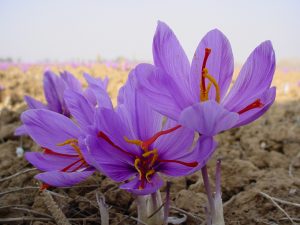
•Kashmir saffron gets Geographical Indication (GI) tag by the Geographical Indications Registry. The spice is grown in some regions of Kashmir, including Srinagar, Pulwama, Budgam and Kishtwar.

•The application for Kashmir Saffron was filed by the Directorate of Agriculture, Government of Jammu and Kashmir, and facilitated by the Sher-e-Kashmir University of Agriculture Sciences and Technology, Kashmir, and Saffron Research Station, Dussu (Pampore).

6) Indian-origin girl Vaneeza Rupani names NASA’s 1st Mars Helicopter
•17-year-old, Indian-origin girl, Vaneeza Rupani has been honoured of naming the NASA’s 1st Mars helicopter ‘Ingenuity’. she submitted her essay into NASA’s “Name the Rover” contest. She has suggested the name ‘INGENUITY’ for the helicopter, which has been liked and accepted by NASA. She is a high school junior from Northport, Alabama.

•In March 2020, NASA announced that its next rover to Mars would be named Perseverance. Perseverance and Ingenuity are scheduled to launch in July 2020 and land in February 2021 at the Mars. Ingenuity will be the first aircraft to attempt powered flight on another planet.

7) HDFC Bank releases song “#HumHaarNahiMaanenge”
•HDFC Bank has released a song titled #HumHaarNahiMaanenge to keep hopes up amidst the ongoing national lockdown and Covid-19 pandemic. The lyrics of the song has been penned by Prasoon Joshi and music has been composed by AR Rahman. HDFC Bank has announced that it will contribute Rs 500 each time the song is shared via social media towards the PM-CARES Fund.


Read More

UPSC Civil Services (Prelims) Examination-2020 postponed, new date to be announced on May 20

13:32
UPSC Civil Services (Prelims) Examination-2020 Update


Click Here to download UPSC Civil Services (Prelims) Examination-2020 Update
Click Here to Like our Facebook page for latest updates and free ebooks


Read More

The HINDU Notes – 04th May 2020

10:59


📰 ‘Economic recovery may take over a year’

Allow high performing districts to resume all industrial activity, says CII(NOTE from writer: This story is embargoed for publication until Monday, May 4, so it should not be carried online until midnight. Also, data for graphics is available in the attached document on the CII poll, if needed.)

•The country’s high performing economic districts should be allowed to play by different rules in the third phase of the lockdown beginning on Monday, according to the Confederation of Indian Industry (CII).

•In a strategy paper submitted to the Centre on Saturday, the CII called for changes in zone classification, saying that the 100-150 districts with the highest economic value — identified either through GDP contribution or density of industrial clusters — should be allowed to restart industrial activity, even in containment areas, if stringent rules are followed. It argued that the cost of 100% testing and aggressive health protocols is lower than continued shutdown in these areas.

•In a CII poll of 300-odd CEOs released on Sunday, almost half said an economic recovery would take over a year. More than half foresee job losses. Three out of four participants identified the complete shutdown of operations as their biggest problem, followed by a lack of demand, supply and distribution chain woes, and a credit crunch.

•In such a situation, the industry body argued for a calibrated exit from the lockdown in the country’s most crucial economic regions.

•Within these districts, small restricted areas such as the actual street, mohalla , building or industrial complex where COVID-19 cases have been identified should be treated as containment zone. An area of about 500 m radius around these areas should be treated as orange zone. The remaining area of the district should be classified as green zones.

•The CII suggested that full industrial operations could be restarted in these priority districts, even within containment zones, if aggressive door-to-door testing, or group testing covering 100% of the population is carried out, and stringent sanitation and distancing protocols are followed.

📰 BRICS against COVID-19

Read More