Thursday, May 07, 2020

Mitras IAS Philosophy Optional Complete Class Notes PDF


GS Score May 2020 1st Week Current Affairs PDF
VisionIAS
06:14
GS Score May 2020 1st Week Current Affairs PDF

JOIN UPSC MATERIALS TELEGRAM--CLICK HERE
Click Here to download GS Score May 2020 1st Week Current Affairs PDF
Click Here to Like our Facebook page for latest updates and free ebooks
Wednesday, May 06, 2020
Daily Current Affairs, 06th May 2020
VisionIAS
17:02

1) Chandigarh launches App “CHDCOVID” to provide COVID-19 information

2) Bamboo Conclave held via Video Conferencing

•Jitendra Singh also deliberated on the Ministry of DoNER’ plans to promote bamboo manufacturing and trade, as well as working out the practicability of Public Private Partnership (PPP) in this sector.
3) National Gallery of Modern Art presents “NGMA KE SANGRAH SE”

•Various other exciting and thought-provoking themes are planned for the coming days. These kind of virtual programs as well as exhibitions will provide art lovers, artists, art connoisseurs, students, teachers, an opportunity to see the rarely presented artworks from their homes. It would be based on various weekly/ daily themes from NGMA’s prestigious collections.
4) Lt Gen Raj Shukla assumes charge of ARTRAC

•General Shukla has served two tenures at the Military Operations Directorate and as the Director-General, Perspective Planning at Army HQ. He has also been Commandant of the Indian Army War College.
5) Indian Navy launches Operation “Samudra Setu”

•An operation named “Samudra Setu” has been launched by the Indian Navy. “Samudra Setu” means “Sea Bridge”. This operation is a part of India’s effort to bring back Indian citizens who are stranded overseas amid COVID-19 pandemic. The whole operation will be executed in close coordination with Ministries of Defence, External Affairs, Home Affairs, Health including various other agencies of the Government of India and State governments.
•As part of Phase-1 of operation “Samudra Setu”, Indian Naval Ships Jalashwa and Magar are presently proceeding to the port of Malè, Republic of Maldives to start evacuation operations from 08 May 2020. Indian Navy has planned to evacuate a total of 1000 persons during the first trip. To overcome the unique challenges associated with COVID-19 strict protocols have also been stipulated.
6) Ashok Michael Pinto nominates as US representative to IBRD
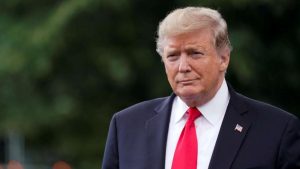
7) The Marcus Wallenberg Prize 2020 announced

8) Vladimir Putin honoured World War II medal to Kim Jong-un

•The World War II medal was awarded to the North Korean leader Kim Jong-un for his role in preserving the memory of Soviet soldiers who died on North Korean territory. In 2019, Russia invited Kim to visit Moscow on May 9, 2020, to attend the military parade marking the 75th anniversary of the victory. Alexander Matsegora, Russia’s ambassador in North Korea, presented the award to the North Korea Foreign Minister Ri Son-gwon.
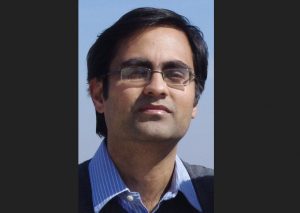
9) Saurabh Lodha gets Young Career Award in Nano Sci. & Tech. 2020
10) CSIR-IGIB partners with TATA Sons for licensing KNOWHOW for FELUDA

•FNCAS9 Editor Linked Uniform Detection Assay (FELUDA) has been designed to alleviate the current COVID-19 situation and cater to mass testing. The main advantages of FELUDA is its affordability, relative ease of use as well as non-dependency on expensive Q-PCR machines.
11) DRDO develops Ultra Violet Disinfection Tower
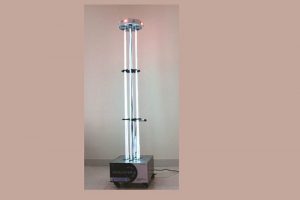
•The UV based area sanitiser may be operated remotely through laptop/mobile phone with the help of wifi link and would be also effective for areas with large flow of people such as shopping malls, factories, metros, airports, hotels, offices, etc. It has also the facility of getting switched off on accidental opening of room or human intervention.
The HINDU Notes – 06th May 2020
VisionIAS
14:32

📰 It’s time for a virtual judiciary
It will not only reduce costs but also lead to speedy disposal of cases
•During the nationwide lockdown imposed to contain the spread of COVID-19, it has become clear that many activities can simply be done online. Over the last decade, Indians have embraced technology in a greater way than ever before. We all have apps on our phones — Amazon, Flipkart, Swiggy, Uber, Ola, Zomato, etc. — that help us procure various goods and services. Today, in these exceptional circumstances, ‘work from home’ is a concept whose time has come like never before. Many offices are gearing up for the new normal of staying at home and working, as restrictions are expected to continue for an indefinite period. This brings us to the question, how can we use technology to ensure speedy disposal of cases?
Many hurdles
•The pendency of cases in various courts in India is staggering. The Economic Survey of 2019-2020 dedicates a chapter to pendency of tax cases and revenue cases. The Survey mistakenly argues for more court infrastructure and judges to solve the problem. On the contrary, the existing infrastructure is grossly under-utilised. There are tribunals such as the Income Tax Tribunal that function only half-day most of the time. To make matters worse, most courts are closed for Christmas and summer vacations. Judges are not accountable for efficiency and performance. Thousands of Indians cannot afford to go to court as legal costs are high and legal procedures are complicated.
•It is a fact that most tax matters do not necessitate personal hearings. Tax cases reach tribunals and higher courts after lower authorities record all the facts. The High Courts and the Supreme Court deal with issues or interpretation of the law. The bane of the court system is that lawyers on both sides need to be physically present in court. Cases are often adjourned due to various reasons. It is in this context that we make the case for a virtual judiciary.
•In such a scenario, we can submit all the papers via mail. The judge can decide the case based on all the available information. Wherever the judge requires clarifications, he or she can seek the same through email. Typically, the judge, after considering all the material available, can pass a draft order and send it to both sides for any comments which they may want to provide. Thereafter, the judge can, after considering the comments, pass the final order. This will enhance the quality of the judgment and also eliminate obvious errors.
An efficient judiciary
•The use of the court hall to decide such matters is superfluous. Not only will a virtual judiciary result in substantial savings in costs but will also lead to speedy disposal of cases. The productivity of lawyers will increase substantially as visits to courts and long waiting hours will be more an exception than a rule. If this practice is extended to other civil cases, efficiency will double, even treble, in judicial functioning.
•The fact that the jurisdiction of a court is defined by geography makes no sense in matters such as taxation and company law. The change to remote, non-personal electronic court hearings will change this. All judges should be empowered to handle any case, wherever it originates. This will result in multiple advantages — the principal one being better utilisation of manpower and infrastructure by equitably distributing the work. Also, malpractices will be limited as there will no longer be familiarity between lawyers and judges in a city.
•While India grapples with a crisis on the health and economic front, we need to think out of the box. We need a change in mindset regarding the way we work. Imagine the overall savings and extent of improvement of the judicial ecosystem if 70% of the cases get decided without going to court? If vested interests are kept aside and collective will to initiate what is for the common good takes precedence, a virtual judiciary can become a part of our lives.
📰 Boost wages to stimulate India’s growth
Important Judgements Passes by Supreme Court PDF
VisionIAS
06:02
Important Judgements Passes by Supreme Court PDF


Click Here to download Important Judgements Passes by Supreme Court PDF
Click Here to Like our Facebook page for latest updates and free ebooks
