•Vesak Day 2020 is observed globally on 7 May. Vesak, the Day of Full Moon is the most sacred day to the Buddhists all over the world. On this day, Lord Gautham Buddha attained enlightenment. The Day is commemorated by the United Nations every year. 2) NITI Aayog launches ‘Surakshit Dada-Dadi & Nana-Nani Abhiyan’
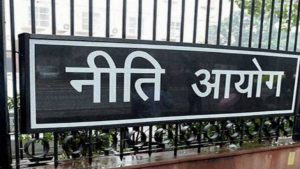
•NITI Aayog has virtually launched a campaign in association with Piramal Foundation to protect senior citizens during COVID-19. The campaign has been titled as “Surakshit Dada-Dadi & Nana-Nani Abhiyan”. This newly launched campaign aims to ensure the well-being of senior citizens during the COVID-19 pandemic. The well-being of senior citizens will be ensured by creating awareness about various aspects such as senior citizens’ health and lifestyle, along with preventive measures as well as requisite behavioral changes in view of the COVID-19 pandemic. •The “Surakshit Dada-Dadi & Nana-Nani Abhiyan” targets to cover 2.9 million senior citizens in 25 #AspirationalDistricts across various states such as Assam, Bihar, Jharkhand, MP, Maharashtra, Rajasthan & Uttar Pradesh.
3) UP govt launches ‘Ayush Kavach-Covid’ App
•Uttar Pradesh government has launched ‘Ayush Kavach-COVID’ app to help people get health remedies which can be useful in the fight against COVID-19. The app has been developed by AYUSH ministry. •The ‘Ayush Kavach-COVID’ App will provide s for measures to boost immunity based on natural resources. The app is designed to tell users how commonly available kitchen ingredients such as cinnamon, tulsi and clove can be used to enhance the body’s immunity to fight against COVID-19. It also offers users the opportunity to seek advice from experts.
4) HP govt to starts ‘Nigah’ to educate family members of migrant returnees
•Himachal Pradesh state government plans to launch a new programme ‘Nigah’. In this programme, the state government educate the family members of the people coming to the state from other parts of the country. •The programme will deploy ASHA(Accredited Social Health Activist) workers, health and Anganwadi workers to create general awareness in maintaining social distancing during home quarantine, to save themselves from any possible infection.
5) Tarun Bajaj becomes new director on RBI Central Board
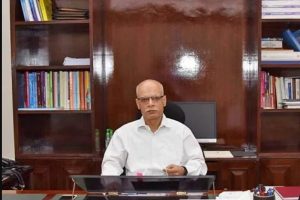
•Economic Affairs Secretary, Tarun Bajaj becomes new director on Central Board of the Reserve Bank of India(RBI). His appointment is confirmed by the Government of India. He is a 1988 batch Indian Administration Service(IAS) officer. He will replace Atanu Chakraborty, who retired on April 30.
•Prior to taking over as Economic Affairs Secretary, Bajaj was the Additional Secretary in Prime Minister’s Office. Before joining the Prime Minister’s Office in 2015, Bajaj was Joint Secretary in the Economic Affairs Department, looking after multilateral funding agencies division.
6) DPS Negi takes charge as Director General to Labour Bureau
•Indian Economic Services officer, DPS Negi took charge as Director-General of Labour Bureau in the Ministry of Labour and Employment. Besides this, Negi also assumed charge as Senior Labour & Employment Advisor of the ministry. He is an Indian Economic Services (IES) officer of the 1985 batch. Prior to this new assignment, Negi served as Advisor Finance (MSME). •About Labour Bureau: Labour Bureau collects and analyses data related to workers, employment, and retail inflation.
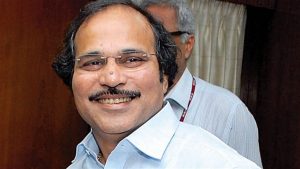
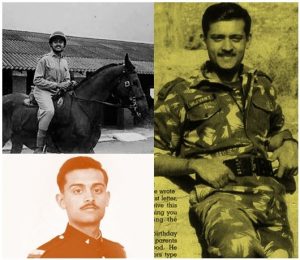
•Adhir Ranjan Chowdhury, Congress leader in Lok Sabha has been reappointed as chairperson of the Parliament’s public accounts committee (PAC). He was reappointed the chairman of the committee by Lok Sabha Speaker Om Birla. 8) A book titled Vijyant at Kargil: The Life of a Kargil War Hero, released
•The book titled ‘Vijyant at Kargil: The Life of a Kargil Hero’ has been released. This book is a biography of Vir Chakra awardee(posthumously) Captain Vijyant Thapar. This book is authored by Vijyant’s father Colonel VN Thapar and writer Neha Dwivedi, a martyr’s daughter. This book shows the journey of Vijyant Thapar to join the Indian Military Academy and the experiences that shaped him into a fine officer.
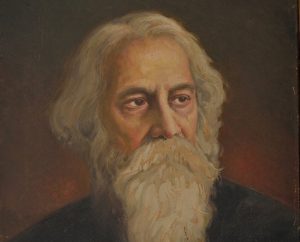
9) Gurudev:Journey of the Maestro through his visual vocabulary
•The National Gallery of Modern Art has organised a virtual tour to commemorate the 159th birth anniversary of Gurudev Rabindranath Tagore. The Virtual Tour has been titled as “Gurudev: Journey of the Maestro through his visual vocabulary”. The virtual tour will give opportunity to have a glimpse of 102 artworks created by versatile genius. •Rabindranath Tagore was a poet, novelist and painter. He was renowned for being the first Indian to be awarded the Nobel Prize for Literature in 1913 for his novel ‘Geetanjali’. He also wrote the National Anthems of India and Bangladesh.
It could lead a coalition to bridge the global deficit of trust with China through a regime of rules
•Even as the coronavirus pandemic unleashes its devastation across the globe, the great and the good have been quick to remind us of the value of multilateralism and the necessity to preserve it. And yes, they are right. To reduce the further spread of the virus, to develop effective medical treatments, and to curtail the worst effects of the inevitable recession that is already in the offing, cooperation among nations will be necessary. But there is a problem: multilateralism is possibly at its weakest today, when the need for it is more dire than ever before. Unless the fundamental problem is addressed, no meaningful fix will be possible.
•We believe that India may be uniquely positioned to help resuscitate multilateralism. With the United States facing multiple internal challenges including the prospects of a deeply divisive Presidential election in November, New Delhi (together with like-minded partners even beyond the usual suspects) could assume leadership in strengthening constructive transnational cooperation. At a time when China is facing a global crises of credibility, India may even consider a last-ditch attempt at mediation; to temper what is increasingly seen as Beijing’s unilateralist revisionism; revive the promise of the gradual socialisation of China into the international system; and its acceptance of the norms and rules that regulate the principal multilateral institutions.
Deepened by the pandemic
•The malaise that afflicts multilateralism is not new. The paralysis of all three functions of the World Trade Organization (WTO) — negotiation, dispute settlement, and transparency — was one sign of that deep-rooted malaise; the severely dented credibility of the World Health Organization (WHO) is just another more recent indicator. The pandemic has heightened the crisis of multilateralism, not created it. And amidst the many cracks in the system, it has deepened one especially dangerous fault-line: multilateralism, in its current form, is incapable of dealing with misuse by “systemic rivals”, and this goes beyond the personality of its current Director-General, Dr. Tedros Adhanom Ghebreyesus, and his perceived Chinese bias.
•The underpinning assumption of the post-war multilateral system was that peace and prosperity went hand in hand. Some like-mindedness and a commonly-held purpose were also assumed among members: increasing economic integration and shared prosperity would help enhance these affinities and contribute to peace. Countries with fundamentally different domestic systems of governance did not form a part of this multilateral order, as was the case with the Soviet bloc in the Cold War years. None of our multilateral institutions was built for a world where the ties of interdependence — which were supposed to enhance the well-being of all — could themselves be “weaponized” for nationalistic gain, at the expense of other players. The misuse of existing rules (or loopholes within the existing rules) by several countries, especially by China (e.g. via forced technology requirements, intellectual property rights violations, and subsidies), to gain an unfair advantage in trade relations was already attracting critique in the last years. But the pandemic has provided us with some even more alarming illustrations of how damaging the weaponisation of global supply chains can be.
•As death tolls rose (in some cases, to catastrophic proportions) many countries responded with export restrictions on critical medical supplies. This was far from ideal, but almost inevitable given the absence of adequate stocks within countries, and little in the rules to curb export restraints. Recognising the shortages that countries were facing — masks, personal protective equipment, ventilators and more — to deal with COVID-19, China offered to sell these products to countries in need. For instance, when the European Union (EU) put up export restrictions, China stepped in at Serbia’s request. But China’s coronavirus diplomacy did not stop there. When India complained that test kits imported from China were faulty, China slammed it for “irresponsible” behaviour. When Australia indicated that it would conduct an independent investigation of China’s early handling of the epidemic, China threatened it with economic consequences. Add to this the dangers of using faulty equipment on critical patients, plus the risks that several actors, including the EU and India, see of predatory takeovers of their companies by China. The pandemic is teaching countries, through bitter experience, that weaponised interdependence is not just a theory but a practice that is rapidly evolving. And it can have life and death consequences.
•Against this background, repeated calls by heads of governments and international organisations urging countries to remain committed to multilateralism ring hollow.
Reforming multilateralism
•To argue for a multilateral rules-based system will never suffice on its own; one must always address the issue of the goals and values that underpin the rules. The remedies are obvious.
•First, of course, is the need for reassurance and policies that reflect a renewed commitment to the raison d’étre of multilateralism. A “retreating” United States must, of course, demonstrate in word and deed that autarchy is not the way forward (of this global crises) and that it remains committed to strengthening global supply chains which are based on the promise of ensuring global stability and the attendant promise of peace and prosperity.
•Second, irrespective of the above, there is an urgent need for some strategic decoupling, handled smartly in cooperation with other like-minded countries. This will not happen overnight. And it will undoubtedly cause considerable disruption to existing global value chains. This in turn, will result in a shrinking of the global economic pie. We will be less prosperous. But we will also be more secure.
•Third, flowing from the above, a multilateralism that recognises the need for decoupling will necessitate closer cooperation with some and distancing from others. Membership of such renewed multilateral institutions would not be universal; rather, one would limit deep integration to countries with which one shares first-order values — such as pluralism, democracy, liberalism, animal welfare rights, and more.
A role for India
•The current crisis in multilateralism could be a remarkable opportunity for India, a country whose pluralism, democracy, and liberalism have often been underestimated by the West. At an immediate level, the gains are obvious: India has also maintained a consistent reserve about a blanket entrenchment in global value chains. As some constituencies in the West seek a gradual decoupling from China, they would be well served to look toward India.
•To make use of the opportunities, for itself and for the provision of certain global public goods, India’s cooperation with like-minded actors will be key. Here, India could work closely with the Alliance for Multilateralism (an initiative launched by Germany and France) to shape both the alliance itself and the reform agenda at large. Working together with a group of countries from the developed and developing countries could further amplify India’s voice.
•But beyond these immediate gains could be a greater role for India. Not since Chernobyl has global public opinion lost as much faith in the competence and integrity of a great power as it has in China because of COVID-19 and the apparent malfeasance and the opaqueness with which it has dealt with the crises. While China may recover faster than most economically, and its military might remains intact, its image as a reliable partner has suffered a huge dent. Neither aid diplomacy nor the unleashing of Chinese soft power can easily recover the trust deficit that exists today between China and much of the rest of the world. While prudence may demand gradual decoupling, it is critical to not be seen as immediately isolating China; with fewer stakes in world order, Beijing’s turn towards revisionism could be faster than anticipated. Instead, India could lead a coalition to bridge this deficit of trust through a regime of incentives and sanctions that seek to embed Beijing into a much more guided and directed socialisation into the rules of the international system. Clearly, the strategic and economic have, however, to be in consonance with each other. In the longer term then, whether multi-polarity is the only firm guarantor of a sustainable and fairer multilateralism requires further debate among scholars and practitioners alike.