1) International Nurses Day observed globally on 12 May
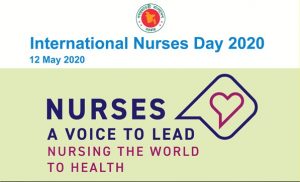
•International Nurse Day is observed globally on 12 May every year. This day is observed to commemorate the birth anniversary of Florence Nightingale. She was also known as Lady with the Lamp. She was the founder of modern nursing and was a British social reformer and statistician. International Nurses Day 2020 Theme: •International Council of Nurses has published its theme for the year 2020 around the COVID-19 pandemic on its official website icn.ch “Nursing the World to Health”. The World Health Organisation (WHO) has designated the year 2020 as the International Year of the Nurse and the Midwife.
2) Ministry of MSME launches CHAMPIONS Portal
•“CHAMPIONS” portal has been launched by the Union Ministry of Micro, Small and Medium Enterprises (MSME). It is a technology driven Control Room-Cum-Management Information System. CHAMPION stands for Creation and Harmonious Application of Modern Processes for Increasing the Output and National Strength. This portal is a one-stop-shop solution of the MSME Ministry.
3) MP govt launches ‘FIR Aapke Dwar’ Yojana
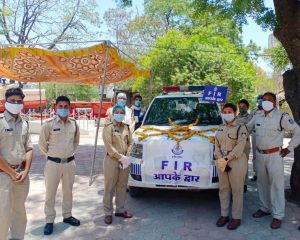
•Madhya Pradesh government has launched country’s 1st ever ‘FIR Aapke Dwar Yojana’ in Bhopal. ‘FIR Aapke Dwar’ Yojana has been started as a pilot project in 23 Police Stations including one urban and one rural Police Station at 11 Divisional Headquarters. For this Yojana “Dial 100” vehicle would have trained Head Constables to lodge FIR. •FIRs in complaints of general nature will be lodged on the spot. In case of serious complaints, guidance will be sought from senior officers. The state government also launched helpline ‘Dial 112’ on the occasion, to facilitate immediate availability of ambulance, police and fire fighting services wherever needed.
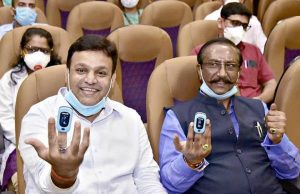
•A programme named “Pranavayu” has been launched by the Bruhat Bengaluru Mahanagara Palike, Karnataka. The programme has been launched by city corporation to create awareness on the need to self examine the respiratory health for Bengaloreans, as the district has 175 confirmed COVID 19 positive cases. Due to large number of cases in the district, it has been ordered to execute quarantine as well as surveillance activities including identifying persons prone to the deadly corona virus infection. •With the help of this programme, people in Bengaluru will be able to carry out self examination for early detection of any ailment that could aggravate the situation if contracted with the viral infection. hence, this programme is an effort to assist people with low oxygen level in their blood to get themselves examined early before their infection becomes fatal.
5) HRD Minister launches Central Univ. of Odisha Helpline “Bharosa”
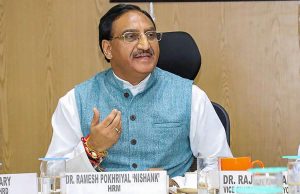
•Union HRD Minister Shri Ramesh Pokhriyal ‘Nishank’ has launched Central University of Odisha Helpline “Bharosa”. This helpline has been launched with an objective of relieving the student community from the distress caused during the troubled time of the COVID-19 pandemic. All University Students of Odisha will be offered Cognitive Emotional Rehabilitation Services via this helpline. •The Helpline “Bharosa” will address the issue of distress faced by any student of any University in Odisha in the wake of COVID-19 pandemic. During the launch event, HRD Minister encouraged the Central and State Universities as well as other Institutions of Higher Education across the country to imitate the Bharosa initiative in order to address the concerns of the student community.
6) Israel names street after Rabindranath Tagore on his 159th anniversary
•Israel has named a street in Tel Aviv after celebrated Indian poet Rabindranath Tagore as a tribute on his 159th birthday on 08 May. Israel named it ‘Tagore Street’ to commemorate the poet’s birth anniversary. •Tagore, who wrote his poetry, novels, stories and plays in Bengali, In 1913 he won the prestigious Nobel prize in literature and till now, he is the only poet from India to have done so.
7) Indu Shekhar Chaturvedi takes charge as Secretary of MNRE
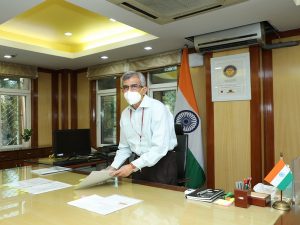
•Indu Shekhar Chaturvedi has taken the charge as Secretary of the Ministry of New and Renewable Energy. He has succeeded Anand Kumar, who has been appointed as the Secretary of Ministry of Culture. •Indu Shekhar Chaturvedi is an IAS officer of 1987 batch and belongs to Jharkhand cadre. Earlier, he was serving as the Additional Chief Secretary and Additional Secretary, Climate Change Department, of the Ministry of Climate Change Department, Environment and Forest, Government of Jharkhand.
8) Prince Harry-Meghan Markle’s biography to be published in August
•The first biopic on Prince Harry and Meghan Markle’s life, titled ‘Finding Freedom: Harry and Meghan and the Making of A Modern Royal Family’ would be published on August 11, 2020. The book is a biopic, written by royal reporters Omid Scobie and Carolyn Durand. •The book aims to portray a couple who continue to inspire many around the world through their humanitarian and charitable work but are often inaccurately portrayed. The book reveals details of the couple who stepped back as frontline royals to settle down in the US in April 2020. The book provides a glimpse into the lesser-known aspects of their romance and decision to go their separate way from Buckingham Palace.
9) Bengaluru Airport: Voted as best regional airport in India & Central Asia
•The Kempegowda International Airport, Bengaluru has won this year’s SKYTRAX Award for Best Regional Airport in India and Central Asia. The airport was voted by customers because of the Best Regional Airport in India & Central Asia for the third time in four years at the 2020 World Airport Awards. •The Awards have supported the planet Airport Survey questionnaires completed by over 100 nationalities of airport customers during the 6-month survey period. The survey evaluated the customer experience across airport service and merchandise key performance indicators from check-in, arrivals, transfers, shopping, security and immigration through to departure at the gate.
10) INR-USD Futures & Options contracts launched on International Exchanges
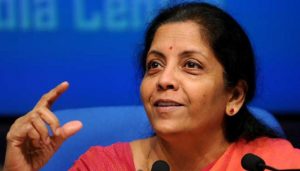
•INR-USD Futures and Options contracts have been launched on International Exchanges by the Union Minister for Finance & Corporate Affairs, Nirmala Sitaraman. The INR-USD Futures and Options contracts have been launched on BSE’s India INX and National Stock Exchange, NSE’s NSE-IFSC, at GIFT International Financial Services Centre, Gandhinagar, Gujarat. •INR-USD contracts have been launched at the exchanges in GIFT-IFSC as a significant market share in financial services related to India has moved to other international financial centres. Launching them at the exchanges in GIFT-IFSC will bring this business to India and benefit the country in terms of economic activity and employment gains. It would also bring larger global participation in India through IFSC and will also connect India’s IFSC globally as it will be available for 22 hours across all time zones for all global participants from GIFT IFSC.
The proposal for the Rajya Sabha as a second chamber had no easy sailing in the Constituent Assembly
•The Rajya Sabha came into being on April 3, 1952 and held its first session on May 13 the same year. The second chamber underwent severe prenatal scrutiny in the Constituent Assembly. The proposal for a bicameral central legislature for the country was discussed at length, with deep divisions between the proponents and opponents. From this churning that went on for eight days with the participation of leading members of the Constituent Assembly finally emerged the Council of States and its mandate. After 68 years, it is instructive to revisit the debates on the need for a Council of States and its performance since then.
•The central legislature that came into being under the Government of India Act, 1919 was bicameral with a Council of States comprising 60 members and a Legislative Assembly comprising 145 members. The membership and voting norms for the Council of States were so restrictive that only wealthy land owners, merchants and those with legislative experience could enter it. Women could neither vote nor seek membership. The Government of India Act, 1935 proposed an elaborate and improved version of the second chamber, but this never materialised. The Constituent Assembly, which was formed in 1947, after adoption of the Constitution became the Provisional Parliament and made laws till 1952.
Bicameralism and federalism
•Bicameralism is a principle that requires the consent of two differently constituted chambers of Parliament for making or changing laws. This principle came into operation in 1787 with the adoption of the U.S. Constitution. Its appeal grew in strength from time to time. At present, 79 Parliaments of the world (41% of the total number) are bicameral.
•Federalism has been in vogue since ancient times when some states got together to confer the power of law-making on a central authority. But modern federalism is entirely different given the complexity of geographical, regional, social and economic diversities marking the constituent units of a federation or a union. It is more so in India. The U.S. is a union of constituent states and so is India — each unit has a set of unique features.
•In The Federalist, the famous essays written in 1787-88 by James Madison, Alexander Hamilton and John Jay to explain the U.S. Constitution, it was stated that the second chamber enables a second and reflective expression of representative opinion besides checking the propensity to yield to the impulse of sudden and violent passions. The U.S. Constitution-makers were influenced by the proposition of the renowned French philosopher Montesquieu who said, “The legislative body being composed of two parts, they check one another by the mutual privilege of rejecting”. Walter Bagehot later noted that the retarding chamber will impede minor instances of parliamentary tyranny, though it will not prevent or really impede revolution.
•Federalism and bicameralism are linked because the federal character of a nation comprising constituent units can be reflected in, and secured by, a bicameral legislature. Despite being conscious of the huge degree of diversities and attendant inequalities that marked British India, and aware of the emergence of independent India as a Union of States, the proposal for the Rajya Sabha as a second chamber had no easy sailing in the Constituent Assembly. It was subjected to serious argumentation and had a narrow escape.
Constituent Assembly debates
•As an illustration, a member of the Constituent Assembly, Mohd. Tahir, asserted that an Upper House was not essential and viewed it as a creation of imperialism. Professor Shibban Lal Saksena went further and warned that such a chamber would only prove to be a “clog in the wheel of progress” of the nation. The need of the hour was quick law-making, he said, which the second chamber would obstruct. He was perhaps referring to the role of the House of Lords in the British Parliament whose powers to veto the expenditure proposed was removed, and its ability to obstruct the laws made by the House of Commons was later severely curtailed in the early 20th century. Lokanath Misra vehemently opposed parity of powers in law-making for the Upper House.
•Proponents of the second chamber such as Naziruddin Ahmad felt that it would introduce an element of sobriety and second thought besides lending voice to the constituent units in the legislative scheme of things. M. Ananthasayanam Ayyangar argued that a second chamber would enable the genius of the people to have full play besides checking hasty legislation. It fell upon N. Gopalaswami Ayyangar to make a strong case for the second chamber. Replying to the debate on the motion, he argued that “the most that we expect the Second Chamber to do is perhaps to hold dignified debates on important issues and to delay legislations which might be the outcome of passions of the moment until the passions have subsided and calm consideration could be bestowed on the measures which will be before the Legislature.”
•As the differences over the need for a second chamber persisted even after adoption of the Constitution of India in 1950, Dr. Sarvepalli Radhakrishnan, the first Chairman of the Rajya Sabha, while replying to the felicitations on becoming the Chairman, said that Parliament is not only a legislative body but also a deliberative one which enables the members to debate major issues of public importance. He echoed what James Madison, one of the authors of The Federalist, said about 165 years earlier in an essay: that the role of the Upper House is to be a deliberative body besides balancing the “fickleness and passion” of the elected House.
•So, what follows from the above discussion is that the House elected directly by the people is susceptible to passions of the moment and electoral considerations. Their imprint on legislation needs to be checked by the second chamber whose members are expected to be sober, wise and well-informed with domain knowledge. The mandate of the Rajya Sabha, as can be gleaned from the Constituent Assembly debates and the experiences of other Parliaments, is legislation — to revise or delay legislation without proving a clog in the wheel of the progress; to represent the interests of the States as a federal chamber; and be a deliberative body holding high-quality debates on important issues.
•Against this mandate of 1949, it is in order to examine the functioning of the Rajya Sabha since its first sitting on May 13, 1952; assess whether it is either obstructionist or disruptive with governments of the day not having the required numbers; and assess its evolving nature.