VISION

Material For Exam

Recent Update

Wednesday, June 10, 2020

The HINDU Notes – 10th June 2020

14:32


📰 India, China agree to ease stand-off

Troops of both countries begin partial ‘disengagement’ from some points along the LAC

•Indian and Chinese troops began a partial “disengagement” from some of the stand-off points along the Line of Actual Control (LAC) in eastern Ladakh, defence sources said on Tuesday, in the first sign of moving towards resolution of the month long stand-off between the Indian Army and the People’s Liberation Army there.

•A series of ground level military talks are due to be held over the next 10 days, beginning Wednesday, to try and resolve most of the other issues at the local level.

•“Partial deinduction has happened from some points in the Galwan and Hot Springs areas. [The] Chinese side removed some of the tents and some troops and vehicles have been moved back, and the Indian side, too, has reciprocated,” official sources said. At some points in the Galwan Valley, Chinese troops have moved back 2-3 km. However, there is no change on the ground situation at Pangong Tso. While this is the first time officials spoke about the ground situation, no government statement was issued, either in Delhi or Beijing.

•This is also the first time senior government officials have acknowledged the continued presence of Chinese troops in these areas where India patrols, and the heavy build-up of vehicles and firepower behind the LAC lines. Despite references to the major build-up that had taken place, officials insisted that there had been “no intelligence failure” and that the Indian Army stopped the PLA advances “quickly and strongly”.

•Outlining the plans for talks on de-escalation, the sources said Major General-level talks were scheduled on Wednesday at Patrolling Point (PP) 14 in the Galwan area as part of the series of talks at the rank of Colonel, Brigadier and Major General, as had been decided at the Corps Commander-level meeting on Saturday at the LAC at Moldo-Chushul. Both the Corps Commanders had a one-on-one meeting for almost three hours before engaging at the delegation level where the main issues were discussed further, they said.

•At the meeting, both sides agreed and identified five locations of conflict currently — PP 14, 15 and 17, North bank of Pangong Tso and Chushul. Of these, the Finger 4 area in Pangong Tso was a contentious issue and would take some time to be resolved, the sources said. This would likely be taken up at the Lieutenant General-level at a later stage, if needed.

Pangong Tso issue

•However, major worries remain at the Pangong Tso (lake), where territory is marked by ridges or “Fingers” in increasing serial order towards Chinese territory. India claims up to Finger 8 and patrols up to Finger 4, but after a skirmish on May 5, Chinese troops have dug in at Finger 4. No mention was made of the situation at Naku La in Sikkim, where the stand-off continues, as the focus for these talks was the Ladakh situation.

•The sources stressed that India remained “firm” on restoring the status quo to pre-May 5 positions, and that apart from troops retreating from the “front lines”, it was necessary to ensure a drawdown of troops and firepower behind the Chinese lines where the PLA had deployed “fighter bombers, rocket forces, air defence radars and jammers among others”.

•“India will continue to have a major build-up until China withdraws the build-up done there. The Indian Army is fully prepared for a long and permanent deployment if the PLA doesn’t retreat,” the sources stated.

•As reported earlier, the Indian side told the Chinese counterparts that it would not stop construction, including the DBO road, as it is well within Indian territory.

•Underscoring the efforts to resolve the tensions, which they referred to as “episodic issues”, the sources said that tactical level hotlines at border meeting points at Daulat Beg Oldie (DBO)-Tien Wein Dien (TWD) and Chushul-Moldo remain “on and open”. It has also been proposed that the Corps Commanders should have formal meetings once or twice every year for better interaction between the two armies at a higher level.

📰 Migrants should not be prosecuted: SC

Read More

THE HINDU NEWSPAPER IMPORTANT ARTICLES 10.06.2020

Tuesday, June 09, 2020

Shubhra Ranjan Current Affairs 2020 Test 01 With Solutions PDF

17:32

Shubhra Ranjan Current Affairs  2020 Test 01 With Solutions PDF


Click Here to download Shubhra Ranjan Current Affairs  2020 Test 01 Question

Click Here to download Shubhra Ranjan Current Affairs  2020 Test 01 Solution
Click Here to Like our Facebook page for latest updates and free ebooks


Read More

Daily Current Affairs, 09th June 2020

17:18


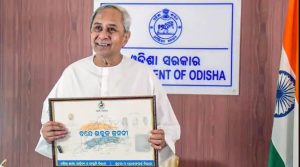
1) Odisha cabinet gives state anthem status to “Bande Utkala Janani”
•The state cabinet of Odisha has adopted “Bande Utklala Janani” or Glory to mother Utkala as the anthem of Odisha through video-conferencing. The anthem has been written by Kantakabi Laxmikanta Mohapatra in 1912. In 1994 the Assembly of Odisha was set on to sing “Bande Utkala Janani” at the end of every session and considered to make it the anthem of the state. The song reflects the glory and natural beauty of Odisha.

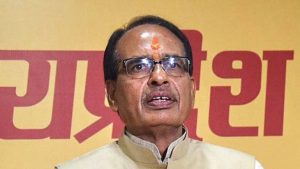
2) MP launches urban street vendor welfare programme
•Chief Minister of Madhya Pradesh, Shivraj Singh Chouhan has started Street Vendor Registration Portal http://www.mpurban.gov.in/ and “Mukhyamantri Shahri Path Vyavsayi Utthan Yojana” and transferred Rs 300 crore to urban local bodies.

•Prime Minister Narendra Modi for starting Pradhan Mantri Path Vikreta Aatmanirbhar Nidhi Karyakram along with this Shehri Path Vyavasayi Utthan Yojana will commence in order to benefit the state’s urban businessmen under which small businessmen or vendors will be given Rs 10,000 in the form of working capital. The current COVID-19 situation, for development purposes, the Government has provided Rs 1,555 crore to 22,800 Gram Panchayats.

3) CBIC launches flagship programme “Turant Customs”
•Central Board of Indirect Taxes and Customs (CBIC) has launched its flagship programme “Turant Customs”. Turant Customs is a mega reform for the ease of doing business. The programme has been launched at Bengaluru and Chennai to take a leap forward to take advantage of the technology for faster Customs clearance of imported goods. With the initiation of programme at Bengaluru and Chennai, it marks the first phase of the All India roll out which would get completed by 31st December 2020.

•Under the “Turant Customs” programme, importers will avail benefits with the elimination of routine interface with the Customs officers which will provide uniformity in assessment across the country. The Customs officers located outside the port of import will clear the goods from Customs after doing faceless assessment remotely. Under this programme, the goods imported at Chennai may be assessed by the Customs officers located at Bengaluru and vice versa, as assigned by the Customs’ automated system.

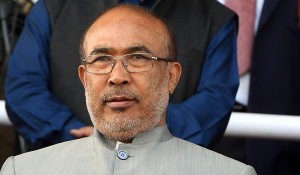
4) Manipur CM N. Biren Singh inaugurates “Plant Health Clinic”
•Chief Minister of Manipur N. Biren Singh has inaugurated “Plant Health Clinic” at the Directorate of Horticulture and Soil Conservation, Imphal. The aim to open the clinic is to boost the economic growth of Manipur through agriculture and horticulture. Along with the clinic, the Chief Minister also launched a mobile soil testing laboratory van.

•The state government has decided to give more emphasis on agriculture and horticulture sectors in this hour of the pandemic COVID-19. The initiative taken up by the department to set up such a plant clinic will provide plant health diagnostic services to farmers.

5) IAF develops rescue pod “ARPIT” for evacuation
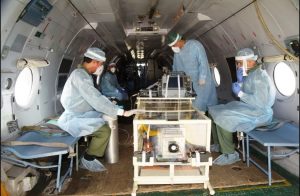
•Indian Air Force has indigenously designed, developed and manufactured an Airborne Rescue Pod for Isolated Transportation (ARPIT). This pod will help for the evacuation of critical patients with infectious diseases including COVID-19 from high altitude area, isolated and remote areas. The system has been formed as a lightweight isolation system made from aviation certified material.

•The ARPIT Design requirements have been evolved and are based on the guidelines issued by Ministry of Health and Family Welfare (MoHFW), National Accreditation Board for Hospitals & Healthcare Providers (NABH) and Centre for Disease Control (CDC), USA. The ARPIT pod has been developed at a cost of Rs. 60,000.

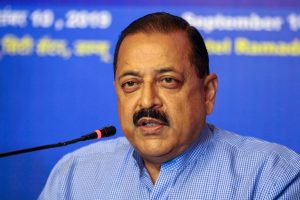
6) Union Minister Jitendra Singh launches “COVID BEEP” app for COVID-19
•Union Minister Jitendra Singh has launched ‘COVID BEEP’ app, India’s 1st indigenous wireless physiological parameters monitoring system facilitated for COVID-19 affected patients. “COVID BEEP” stands for Continuous Oxygenation & Vital Information Detection Biomed ECIL ESIC Pod.


•‘COVID BEEP’ has developed by Employees’ State Insurance Corporation (ESIC) medical college, Hyderabad in collaboration with Indian Institute of Technology (IIT) Hyderabad and the Department of Atomic Energy. The COVID BEEP has incorporated NIBP (non-invasive blood pressure) monitoring, ECG (electrocardiogram) monitoring and the respiratory rate. It will greatly reduce the transmission risk as well as help save resources like personal protective equipment (PPEs).

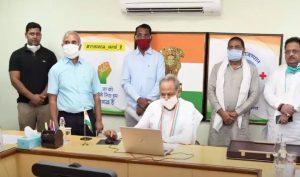
7) Rajasthan Goverment launches “Raj Kaushal Portal”
•“Raj Kaushal Portal” and “Online Shramik Employment Exchange” has been launched by the Rajasthan Goverment. The portal has been developed by the department of Information and Technology (IT) and Rajasthan Skill & Livelihoods Development Corporation (RSLDC). The “Raj Kaushal Portal” aims to improve availability of opportunities for the migrated workers and hence acts as a bridge between industry and labourers.

•The portal aims to overcome the labour shortage faced by the industries by making it easier for the workers to get employment who are suffering from livelihood losses. The “Online Shramik Employment Exchange” comprises of data of over 12 lakh migrant workers including registered workers of planning offices and building and other construction boards. It also contains data of more than 53 lakh workers and manpower trained in RSLDC and ITI.

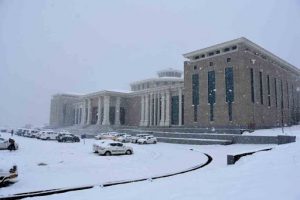
8) “Gairsain” becomes summer capital of Uttarakhand
•Gairsain in Chamoli district has been formally declared as the summer capital of Uttarakhand. The announcement was made after the assent from the governor Baby Rani Maurya was received in order to declare Gairsain the summer capital of Uttarakhand. Also, the declaration of a summer capital in the region is expected to expedite the development of the hilly areas.

•Earlier in March 2020, during the budget session of Uttarakhand, Chief Minister Trivendra Singh Rawat made the announcement about Gairsain being made the summer capital of Uttarakhand. He dedicated the summer capital status to Gairsain to thousands of men and women of Uttarakhand who fought for its statehood. Gairsain is a tehsil in Chamoli district which is located about 270-km from existing temporary capital of Dehradun.

9) Tech Mahindra signs UN Global Compact Initiative to curtail emissions
•Tech Mahindra has signed a joint declaration with UN Global Compact and hence joined 155 global companies in calling for policies to build resilience against future shocks by supporting the activities targeted to hold global temperature rise to within 1.5°C above pre-industrial levels, in order to reach net-zero emissions before 2050. Tech Mahindra seeks to reduce carbon footprint and emissions by moving towards a zero-carbon resilient economy. It will achieve its objective with the use of new-age technologies such as internet of things, artificial intelligence and blockchain.

•These 155 global companies from across 34 sectors have a combined market capitalization of more than $2.4 trillion, representing five million employees. The business voices of the above signatories will be convened by the Science Based Targets Initiative (SBTi) and its business ambition for 1.5°C campaign partners, the UN Global Compact and the We Mean Business coalition.

10) New Zealand declares itself free from “Coronavirus”
•The Health Ministry of South-Pacific nation, New Zealand has declared that the nation has become free from “Coronavirus”. The announcement was made when the last person who was being monitored for coronavirus was released from isolation and regarded as recovered. Hence, New Zealand has announced to lift all the coronavirus measures that were implemented in the country and move to national alert level 1 from midnight on 9 June 2020.

•After lifting the measures, public and private events as well as the retail and hospitality industries and all public transport would be able to resume without social distancing norms. Country has decided to keep the borders remain closed to foreigners. New Zealand achieved this milestone after 75 days of restrictions including about seven weeks of a strict lockdown during which most businesses were shut and everyone except essential workers had to stay at home.

11) Javed Akhtar becomes 1st Indian to receive Richard Dawkins Award
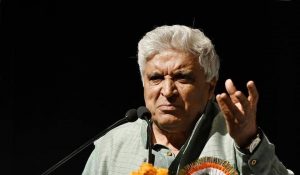
•Poet, lyricist and writer Javed Akhtar has honoured with the prestigious Richard Dawkins Award for 2020. He became the 1st Indian to be given the honour for critical thinking, holding religious dogma up to scrutiny, advancing human progress and humanist values. The award recognises a distinguished individual from the field of science, scholarship, education, or entertainment, who publicly proclaims the values of secularism and rationalism and upholding scientific truth.

12) Kiran M. Shaw named EY World Entrepreneur Of The Year 2020
•Executive Chairperson of Biocon Ltd, Kiran Mazumdar-Shaw has been named EY World Entrepreneur Of The Year 2020. She was picked from among 46 award winners from 41 countries and territories vying for the world title. She is the first woman entrepreneur from India and the third Indian to win the title in the award’s 20-year history.

•Kiran is also only the second woman worldwide to hold this title, after Olivia Lum of Hyflux Limited, Singapore, who won the award in 2011. Uday Kotak of Kotak Mahindra Bank (2014) and N R Narayana Murthy, co-founder of Infosys Ltd, (2005) are the other winners from India.

13) IIFL Finance signs Rohit Sharma as brand ambassador
•India’s Non-Banking Finance Companies, India Infoline Finance Limited (IIFL) has signed Rohit Sharma as its first-ever brand ambassador. The company has launched 30-second message titled “Rohit Sharma Ki Seedhi Baat”, under its first-ever campaign #SeedhiBaat with Rohit Sharma, which is a public service message advising people on safety guidelines and rules to follow during lockdown to fight Covid-19 outbreak. IIFL Finance is one of India’s leading Non-Banking Finance Companies, with over ₹36,000 crores of assets under management.


Read More

The HINDU Notes – 09th June 2020

12:56


📰 ‘Farmers are strong, not vulnerable; they need to be given choices’

Option for direct marketing during the lockdown period has reduced government procurement of wheat in some States, says Agriculture Secretary

•The disruption caused by the COVID-19 pandemic led to at least 12 States allowing direct marketing of agriculture produce, which offered greater options to farmers during the lockdown, Agriculture Secretary Sanjay Agarwal says. The two new ordinances pushing agricultural marketing reform will widen choices for small farmers, he adds.

Despite the lockdown, this year’s wheat harvest hit record highs, and government procurement at minimum support prices (MSP) is also higher than last year. However, Haryana and Uttar Pradesh have fallen short of procurement targets. What is the reason?

•I was looking at a video of ITC. This year, because direct marketing was allowed for farmers to sell their produce during the lockdown, they had a line of over two km of tractors outside their purchasing centres. If as a farmer, you are faced with the cost of transport to an MSP centre, and if you are getting the same price at the village level, what will you do? In fact, this year, procurement centres were two and a half times more in comparison to last year. But because direct marketing was allowed and a corporate purchaser was available, that gave the farmer a choice and that changes everything. And that becomes the logic of bringing the trade and commerce ordinance this year, where direct marketing takes place.

Speaking of these two ordinances to reform agriculture marketing and facilitate contract farming, how will they help small farmers?

•Both ordinances will be most beneficial to small and marginal farmers. A farmer’s produce is unregulated at time of production, but there are restrictions on where to sell and whom to sell, which is not there for any other commodity globally or in India. The Farm Trade ordinance will open up this ecosystem.

•Right now, the farmer can only sell produce to a licensed trader in one of four physical locations: mandis operated by marketing committees, very few private mandis, cold storage warehouses declared as deemed markets, or direct licensees which have to notify a space with certain facilities. Mandi secretaries say most big farmers bring a truckload of produce; they know the officials there, they have access to knowledge about prices and they get the right price. But a small farmer may produce just two quintals. So an aggregator at the village level will take it to the mandi with the understanding that he will take a set percentage of the sale price, and give the rest to the farmer. But in more than 50% of cases, farmers are being cheated by aggregators who get a receipt for a lower price.

•Number two, the contract farming ordinance. If I’m a large farmer who grows a large quantity of high quality organic potatoes and sells to a big retail chain dependent on me, I can negotiate my terms. But if I’m a small marginal farmer who wants to grow a high value crop like that which doesn’t have that much demand in mandis, or if I add value in terms of processing, then I have to take the total risk in terms of production and then go find a buyer in the industry.

•This ordinance allows the small farmer to benefit from a high value product by transferring the risk to the corporate purchaser, who will buy the produce at a fixed rate. The industry can also provide technology inputs and get seeds and pesticides at wholesale prices, which will translate into higher production, higher value, higher incomes. There is also a unique provision for production agreements, where the farmer is simply paid for agricultural services rendered, and this is very useful in poultry and livestock sector.

Will the safety net of MSP continue to remain effective under the new direct marketing regime?

•This provides a different option to farmers. MSP is a support system for the farmer, where he knows he can sell at a certain place for that price. There is a clear assurance that MSP shall continue. But going to the MSP centre also has a cost, so now the farmer has an option to choose direct marketing instead.

•Why do you think that the farmer will not understand if the price offered in the village is not the right price? He is aware of the mandi price and the MSP rate. There is also an important provision to develop a price information and market research system under the Act. So he can make an informed choice.

•We are also creating the right ecosystem through Kisan Credit Cards, farmer producer organisations which will provide marketing and legal support, and creation of Rs. 1 lakh crore financing facility for post harvest management.

•If you consider a child as weak, and always handhold that child, try to protect that child, the child will never grow. Our farmers are strong, they have knowledge and competence and have brought India to this stage of surplus foodgrain. Considering farmers as vulnerable, thinking people will take them for a ride in everything, limiting their choices, restricting them — that is not helpful. Every provision in this Act is in farmers’ interest.

📰 Economy to contract 3.2% in FY21: WB

Read More